
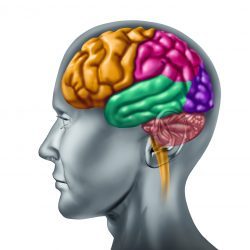
“What does the frontal cortex do? Gratification postponement, executive function, long-term planning, and impulse control. Basically, it makes you do the harder thing.” Robert M. Sapolsky
“By failing to prepare, you are preparing to fail.” Benjamin Franklin
NOTE ADDED IN REVISION: Recently, I posted a blog titled “Science Sunday: Executive Function in Parkinson’s” (click here). The final section of this post, “Physical Exercise and Cognitive Brain Exercises Can Improve Executive Dysfunction,” introduced a video created by Jules, a health sciences and neurology professional. I included a link to her website, but it was blocked by Instagram. Out of her kindness, she re-recorded the video for me to feature on the blog. Therefore, with heartfelt thanks, I have rewritten this section to describe Jules’ mind-body exercise.
Introduction: I have been away from blog writing for too many weeks. For a while, it was the process of recovering from total right hip replacement surgery 2 months ago. Well I did write on my experience of the first 10-days afer surgery, and since then life has been easy peasy.
The topic today is a short story, because I am interested in learning more about executive function, or executive dysfunction is a more appropriate term. Susan tells me that it is one of my defects from Parkinson’s. It is a concern of mine to understand the basis behind executive function, including its physiology, role, and function, as well as how it can be effectively tackled and managed in the context of Parkinson’s. Making decisions, planning, and handling new situations are examples of what our executive function capacity enables us to do. So yes, one would call it a cognitive skill. Moreover, it contributes to our quality of life.
“Attention is the mind’s feet; if you do not control your attention strictly, it runs into misleading pathways.” Zicheng Hong
Executive Function: Gail Belsky defines executive function this way (click here for article) , “Executive function is a set of mental skills. It includes working memory, flexible thinking, and self-control. We use these skills every day to learn, work, and manage daily life. Trouble with executive function can make it hard to focus, follow directions, and handle emotions, among other things.”
One way to look at it is that executive function serves as your brain’s gatekeeper, as it keeps things in order, manages time, and prioritizes your day and goals. It helps you better understand and react to situations, and allows information to enter your brain and be stored in its proper place. That is the initial way I interpret or define executive function.
“What controls your attention, controls your life.” Darren Hardy
Executive Function and Parkinson’s: The biggest reason that I have not been writing more blog posts in the recent few weeks that I am writing a paper to be submitted for peer-review and publication (I cannot multitask the way I used to during my academic career; HINT: could this be an aspect of executive dysfunction). The topic of the new paper is managing motor and non-motor symptoms of Parkinson’s. Executive function/dysfunction is an important part of non-motor cognitive impairment in Parkinson’s, and up to 40% of people-with-Parkinson’s have executive function defects.
Scientifically, executive dysfunction is explained as follows. There is a complex relationship between dopamine loss and frontal lobe dysfunction underlies many of these difficult transitions during executive dysfunction. The motor symptoms primarily result from dopamine depletion in the substantia nigra, and the frontal lobes, which are essential for executive functions, are also affected. Thus, dopaminergic denervation in the striatum, closely connected to the prefrontal cortex, disrupts the flow of information needed for tasks that involve working memory, planning, and the control of attention.
Another way to consider the role of dopamine in the relationship between the substantia nigra and the frontal lobes in executive function is to imagine a river with a dam constructed, supplying water (dopamine) between two cities flowing from substantia nigra to frontal lobe. As long as water is regularly released from the dam and freely flows into frontal lobe, the city and its population thrive, and so does executive function. However, if the water stops filling the dam or the pipes needed to open the water gates are rusted throughout, causing the all-important water (remember, it is dopamine) to stop flowing, the fields and the livelihoods of the families wither in frontal lobe, and it deteriorates, now showing signs of executive dysfunction.
“Working memory capacity is really the ability to hold and manipulate information while you’re actively trying to block out distraction.” Amishi Jha
Physical Exercise and Cognitive Brain Exercises Can Improve Executive Dysfunction: Physical exercise can help address the defects of executive dysfunction. There are also mind games one can play to help restore function in executive dysfunction. You will have to wait for the full-length story on executive function that my mind is planning. However, I want to close with one very simple cognitive brain exercise. If you believe in neuroplasticity and our ability to repair broken paths/circuits, try this brain game.
Please do NOT consider this game as medical advice or a diagnostic tool for executive dysfunction.
It is given solely as entertainment and to see how your fingers and brain are interacting together, or not. The creator of this brain game, Jules, is an instructor, former world-class athlete, and has a current interest in neuroplasticity and, in general, good brain health.
Two of her interests are Brain-Body Play Method and Neuroplasticity and Movement Tools. I have found Jules’ site to be filled with interesting mind games, which greatly challenge me. Does this prove anything? No, but I need to keep using my mind in other ways that I usually do, so do these games as they are posted. They are good for my brain, and to help heal possible damage caused by my Parkinson’s. I encourage all of you to try some of these mind-body games.
The one example that I tried and found it most difficult was entitled “Shoot (or squirt) the bunny.” Take one hand and form a simple pistol (forefinger out and the thumb is up) and with the other hand form bunny ears (forefinger and middle finger straight up). Then while looking at the hands, switch hands, that is, now the other hand makes the pistol and the other hand makes the bunny ears. And then keep going back and forth, as quickly as you can. Speed was not my only problem; I also struggled with proper finger motion to form the pistol and bunny ears. Got to keep practicing. The video is below and you can find Jules here (click for her website).
This exercise may not precisely address executive function but the idea of doing both hands, changing hand tasks, will certainly tax your brain, and over time, that could help restore executive function.
“There are estimates that we daily walked for 10 – 20 kilometers for hundreds of thousands of years. The world’s best problem solving machinery grew up under conditions of consistent, strenuous physical activity. It makes sense that when we don’t recreate the environments in which the organ was forged, we get a loss of function. And that when we do restore those environments, we get that function back. The effects of aerobic exercise on executive function skills is a powerful empirical example of this idea.” John Medina
 Journey with Parkinson's
I just returned to Chess after an absence lasting decades.
The bunny thing is harder than it looks!
LikeLike
Tommy, it really is more complicated than it looks. AND that’s what makes the presentation so amazing, she’s just talking away and doing he changes effortlessly…me I had to concentrate very hard, and it still went very slow.
LikeLike