

“He who does not mind his belly, will hardly mind anything else.” Samuel Johnson
“Food is an important part of a balanced diet.” Fran Lebowitz
Introduction: Do you have Parkinson’s? If yes, do you have constipation? Swallowing problems? Get sleepy and need a nap after eating a big meal? Does your carbidopa/levodopa sometimes not work well? Each of these questions will be answered below.
“You are what you eat”: This famous comment and its origin in 1825, when Jean Anthelme Brillat-Savarin said: “Tell me what you eat, and I will tell you what you are“; Ludwig Andreas Feuerbach in 1863 said “man is what he eats”; and “in the 1930s by American nutritionist Victor Lindlahr, who hosted a radio show and wrote a book entitled “You Are What You Eat“. Sometimes, eating is an artful act. Other times, food is simply our fuel. Regardless of how one views food, it is processed the same way in the digestive pathway.
“One cannot think well, love well, sleep well, if one has not dined well.” Virginia Woolf
Digestive Tract Function:
•breaking down the food ingested;
• absorbing the nutrients;
•eliminating the waste.
To utilize the important components in the food we eat, the digestive tract extracts the building blocks required for life, along with other nutrients our bodies need to survive.
If you consider one of the main drivers of digestion to be muscular, you do not have to speculate very far about how digestion is performed in individuals with Parkinson’s. Simply put, it slows down.
“Strength is the capacity to break a chocolate bar into four pieces with your bare hands – and then eat just one of the pieces.” Judith Viorst
The Timing of Digestion: In the ‘madness’ that drives me to choose topics for this blog, writing about digestion has been a planned topic for a long time; it was just a matter of finding the time to write about it.
Maybe you think that when you eat a meal, a few minutes later it is done and over with. By contrast, think in terms of hours to process the food we eat. First, the organs of digestion are shown below.
When you look at the diagram, you’ll notice a large number of organs are involved. Maybe you are wondering what some of them do to support the digestive tract. For example, the pancreas; it is hugely important because it synthesizes and secretes many of the enzymes used to digest the food components you eat. The stomach is essentially sterile; it has a pH close to 1.0 and contains an essential protease that digests food. Low pH denatures and unfolds proteins, facilitating digestion by proteases. Next, a closer look at the timeframe of digestion, followed by what’s going on in Parkinson’s.
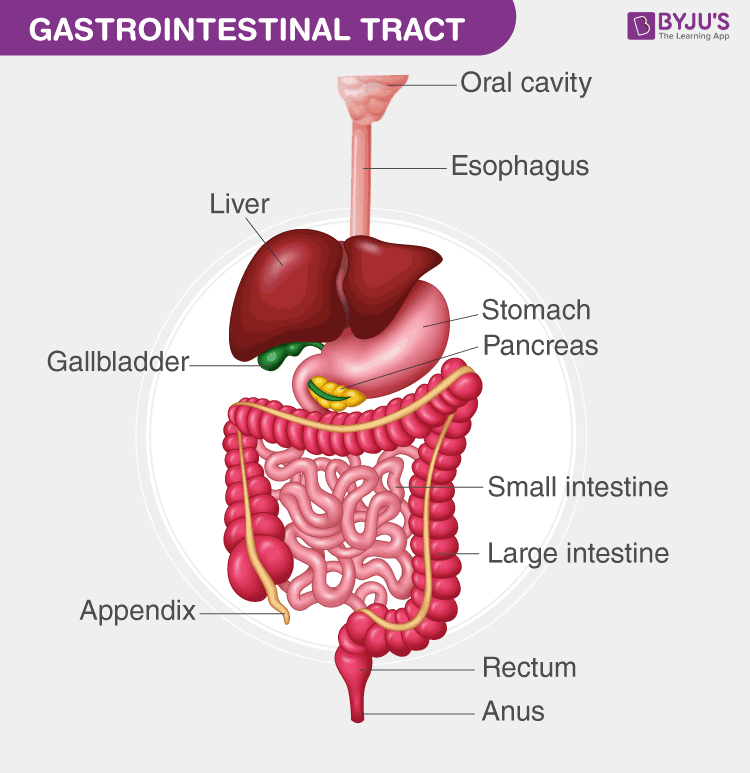
The Organs of the Digestive Tract
Breaking it down by organs and such after eating food:
Mouth and Esophagus: takes only a few seconds.
Stomach: 2 to 4 hours. Simple sugars digest faster, while high-fat and high-protein foods take longer to digest.
Small Intestine: 2 to 6 hours. Nutrients are absorbed here; therefore, this also means levodopa and carbidopa are taken up here.
Large Intestine (Colon and rectum): 12 to 48 hours. Water and minerals are absorbed, and waste is compacted into the stool. This stage usually takes the longest.
“There is no sincerer love than the love of food.” George Bernard Shawn
How Parkinson’s Changes Digestion: There are four points here. First, the impact of the gastrointestinal symptoms in Parkinson’s. Second, the extended time to digest food in anyone with Parkinson’s. Third, the negative impact of a ‘big meal’; and fourth, the availability of levodopa for proper absorption.
•The autonomic nervous system (ANS) is frequently affected by Parkinson’s, in much the same way as the brain, but in the peripheral nervous system. The ANS does many things. The ANS is the part of your nervous system that regulates involuntary bodily functions, such as heart rate, digestion, breathing rate, and temperature control. What’s important for this blog post is the sympathetic part, typically modified to aid digestion. The sympathetic pathway helps slow the stomach during digestion. The parasympathetic system is charged with stimulating the digestive tract.
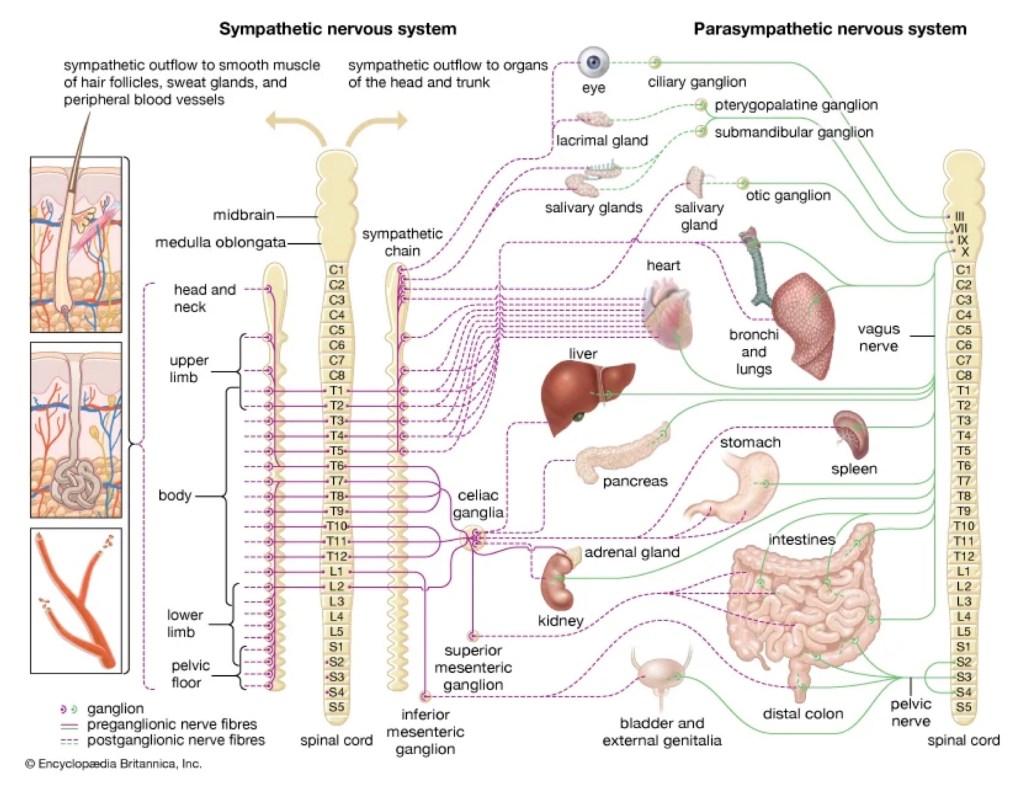
The Autonomic Nervous System (ANS). Britannica Editors. “autonomic nervous system”. Encyclopedia Britannica, 11 May. 2026, https://www.britannica.com/science/autonomic-nervous-system. Accessed 5 June 2026.
•Large Inestine/Bowel Slowed Motility: Parkinson’s has a big influence on the digestive tract, and it usually occurs in several places, starting in the large intestine/bowel, slowing down motility. This could cause chronic constipation.
•Delayed Gastric Emptying (Gastroparesis): Food moves very slowly out of the stomach into the small intestine. This can cause bloating, early fullness, and nausea.
•Swallowing Difficulties (Dysphagia): Muscles in the throat and esophagus become discoordinated, making it difficult or unsafe to swallow food and liquids.
•Medication Absorption Issues: Because of delayed stomach emptying, crucial Parkinson’s medications (such as levodopa) sit in the stomach instead of reaching the small intestine where they are absorbed, resulting in unpredictable symptom control. The figure below details the transport system by which levodopa moves from the small intestine into the bloodstream, then crosses the blood-brain barrier to enter the brain.
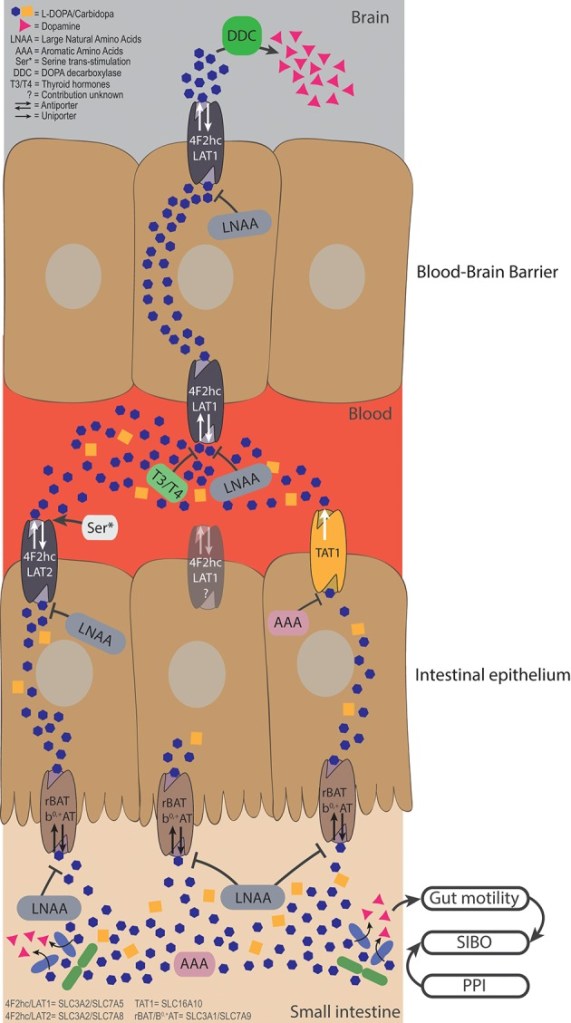
Levodopa transport in the presence of competing large neutral amino acids (LNAAs) is crucial for its absorption. It is taken up in the small intestine by the rBAT/b0,+AT transporter and then transported across the basolateral membrane by 4F2hc/LAT2 and TAT1. LNAAs can hinder levodopa uptake both apically and basolaterally, while bacterial degradation may elevate dopamine levels in the gut, potentially leading to small intestinal bacterial overgrowth. To enter the brain, levodopa crosses the blood-brain barrier via 4F2hc/LAT1, a process that can be affected by high thyroid hormone levels or LNAAs. Serine from a protein-rich meal may enhance levodopa efflux into circulation. Finally, levodopa is converted to dopamine in the brain, thereby compensating for diminished striatal dopamine levels in patients with Parkinson’s. (Figure and Figure legend (shortened here) from van Kessel SP, El Aidy S. Contributions of Gut Bacteria and Diet to Drug Pharmacokinetics in the Treatment of Parkinson’s Disease. Front Neurol. 2019 Oct 15;10:1087. doi: 10.3389/fneur.2019.01087. PMID: 31681153; PMCID: PMC6803777)
“One cannot think well, love well, sleep well, if one has not dined well.” Virginia Woolf
Eating a Big Meal with Parkinson’s: First, an analogy- imagine you are driving down a busy interstate highway, and all of a sudden, you slow down to a crawl/stop. Your driving assistant program (Waze, Google Maps, etc.) comes on a screen and says, “There has been an accident 12 miles ahead. The right lane is closed, and fire and rescue teams have arrived. Delay time is 45 min, and this is the best route.” Not much to do now, you crawl along until you reach the accident, and there remain only remnants of the accident. You slowly accelerate, but you have now lost all that time. Translate this back to your digestive tract.
You just finished a big meal, and you have waited 45-60 minutes before taking your next carbidopa/levodopa dose. However, the big meal has slowed down the usual slow process further; now it’s crawling time to get from the stomach to the small intestine, and your dose of carbidopa/levodopa is stuck in the stomach. Finally, it clears the stomach, but the long delay still causes trouble in the small intestines. There remains a large amount of neutral amino acids being absorbed from the big meal. Thus, not all of your levodopa is being taken up into the bloodstream. The large meal and delayed gastric emptying have altered the usual pattern of levodopa uptake. Your dose of levodopa has been hijacked by the big meal.
“So you can settle the f__k down. My mother used to say, “Primero comemos, entonces lo demás.” That means, “first we eat, then we do everything else.”” Brian Yorkey
The Potential Consequences of Eating that Big Meal: I love eating a big breakfast, but the penalty of Parkinson’s is a nap! Looking into the changed physiology of individuals with Parkinson’s, it could be a combination of causes. Here are some of the other physiological changes that could account for the need for a nap:
•Postprandial Hypotension (Low Blood Pressure). Our blood pressure drops after eating. Yes, blood rushes to the gut to aid digestion. Our ANS reacts differently from that in non-Parkinson’s individuals, and our blood pressure can drop, leading to fatigue.
•Gastroparesis (as already described). We have slowed digestion because Parkinson’s often causes the stomach muscles to contract slowly. This means food takes longer to digest, which can lead to fatigue.
•General Energy Expenditure. Everything we do requires energy, so a large meal consumes more of it and leaves us more prone to fatigue. Why? This is likely due to our constant energy depletion from muscle rigidity, tremors, or dyskinesia.
•“Off-On” effects from protein and other factors that affect carbidopa/levodopa performance. This is important because a large meal may slow digestion, potentially delaying the next dose of carbidopa/levodopa (as detailed above).
•Sleep deprivation (a common issue in Parkinson’s). If you have poor sleep at night or you do not get enough sleep, post-meal drowsiness usually becomes stronger due to a higher sleep drive.
•Everyone, with or without Parkinson’s, would experience these effects after a big meal:
–Energy for Digestion: Your body activates the parasympathetic nervous system (the “rest and digest” mode).
-Blood Sugar Ups and Downs: High-carbohydrate and sugary foods cause a rapid spike in blood glucose. Insulin is released to manage the sugar, and you then feel sleepy from the sugar crash.
– Hormonal Changes: Eating triggers the release of serotonin and melatonin, both of which promote relaxation and sleepiness.
A Harsh Reality: The best remedy is to eat smaller meals multiple times per day, centered on your carbidopa/levodopa schedule. Yes, this is a terrible answer, or just keep enjoying the afternoon naps. And learning why Parkinson’s does what it does when eating a big meal does not lessen the blow, because it causes even more havoc and pain for us.
“I’ve long believed that good food, good eating, is all about risk. Whether we’re talking about unpasteurized Stilton, raw oysters or working for organized crime ‘associates,’ food, for me, has always been an adventure” Anthony Bourdain

