
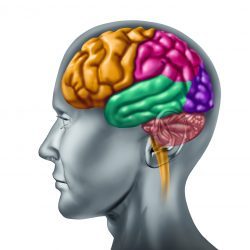

“Nature creates unity even in the parts of a whole.” Eugene Delacroix
“The whole is more than the sum of its parts.” Aristotle
Hypothesis: A paper published by Chase et al. [Chase, Thomas N., Ahmad AL‐Sabbagh, Minako Koga, and Kathleen Clarence‐Smith. “Reduced Plasma Levodopa Fluctuations with More Frequent Administration of a Novel Carbidopa/Levodopa Functionally Scored Tablet.” Clinical Pharmacology in Drug Development (2024)] asked an interesting question: Could taking a smaller dose of levodopa/carbidopa more frequently than the usual dose prevent motor complications?
“A fist is more than the sum of its fingers.” Margaret Atwood
Background: As we all know, the “gold standard” of treatment for Parkinson’s is levodopa/carbidopa. The disease manifests itself in numerous motor and non-motor symptoms, with motor symptoms reflecting the erosion of dopaminergic neurons from the substantia nigra. We use levodopa/carbidopa to replace the loss of these all-important dopaminergic neurons. Levodopa/carbidopa is neither curative nor slows the progression rate; it merely fills the widening gap of missing dopamine from these neurons. A significant obstacle with the continued use of levodopa/carbidopa is the development of dyskinesia, which frequently occurs in many patients within 5-10 years of treatment.
Why does this dyskinesia develop? Think about it this way: Our dopaminergic neurons are usually constantly manufacturing small amounts of dopamine; when needed, they can make more. By contrast, in using levodopa/carbidopa, we take a high dose amount of the drug that has a huge peak of action and then a decay downward, and then we start the process over again in a few hours. This threshold changes the response of neurons that need dopamine. To deal with these up-and-down gaps in dopamine levels, scientists have developed long-acting forms of levodopa/carbidopa (which have profoundly not worked for me) and suggested that taking smaller doses of levodopa/carbidopa more often might offer some release from the troubling dyskinesia.
“Nature creates unity even in the parts of a whole.” Eugene Delacroix
Clinical Study: The idea is simple: make a new levodopa/carbidopa tablet that is easily cut in half by scoring it. This would facilitate taking a smaller dose more frequently. There were 3 objectives of this study:
•Demonstrate the equivalence of this new tablet to the standard 25/100 mg immediate-release form of levodopa/carbidopa.
•determine the effect of food consumption on the lifetime of this new capsule.
•compare the pharmacokinetics of the half-tablet given every 2 hours to a whole tablet taken every 4 hours.
“Nature creates unity even in the parts of a whole.” Eugene Delacroix
Results: How did the newly scored tablet compare to the traditional tablet? The two tablets had no statistically significant differences, so their bioequivalence was the same.
Second, as measured in both tablets, the effect of a high-fat, high-calorie meal on plasma levodopa and carbidopa. Levodopa levels remained constant, but carbidopa dropped significantly. Therefore, carbidopa’s protective role to prevent levodopa’s peripheral destruction was diminished. This resulted in a reduction of maximal levodopa levels for both tablets.
Third, and most importantly, the whole scored 25/100 mg tablet was taken every 4 hours, and half of the scored 12.5/50 mg tablet was taken every 2 hours. Interestingly, plasma levodopa levels were significantly lower, with the half-dose taken twice as often. However, the bioavailability did not differ between the two treatments. The side effects of the two drugs were similar and minor. The Table below shows the comparison of the study, two half tablets every 2 hours vs. 1 tablet every 4 hours.

What Does This Mean? For several years, it has been theorized that it would be better to replace the missing dopamine in your brain with a more constant amount, effectively reducing motor complications caused by levodopa/carbidopa. We know that dopaminergic neurons have constant dopamine levels transmitted to their postsynaptic receptors. Clearly, when we take our usual dose of levodopa/carbidopa, we flood the environment with vast amounts of levodopa, followed by the subsequent trough that follows while measured in the blood. Eventually, the process reaches the brain and gives exposure of large amounts of dopamine and then quickly leads to very small levels. Using a concept as described here with half-doses twice as often could improve dyskinesia in Parkinson’s.
Is There a Downside to This New Levodopa/Carbidopa Tablet? You are likely comfortable taking levodopa/carbidopa every 4 hours; however, taking tablets at half-does every 2 hours may become problematic, especially around eating. Clearly, there is somewhat of a conflict with our authors working for the drug company manufacturing the scored levodopa/carbidopa tablets. And this will not be considered a generic drug; thus, likely, when introduced into the pharmacies of the world, insurance reimbursements will be far less than for generic levodopa/carbidopa. I have been cutting my generic levodopa/carbidopa tablets in half for several years. While imperfect, I have noticed no small or large discrepancy in using such a split tablet. The picture below shows 2 different generic levodopa/carbidopa tablets and the pill-cutter product in the middle.

Conclusions: This was an interesting paper testing a simple idea using a new type of levodopa/carbidopa tablet. The article is Open Access, so one can download it for free; just search for the authors or the article title. Eventually, these tablets will be on the market. Should you try them? That all depends on whether you need to counter the impact of dyskinesia and what you are beginning to sacrifice in adopting this idea of taking 1/2 the drug amount twice as often. You could try it with your existing supply of generic levodopa/carbidopa. NOTE: Please discuss this idea with your Movement Disorder Neurologist before proceeding. Their knowledge about you and your Parkinson’s would be invaluable in determining whether you can proceed with such a levodopa/carbidopa schedule.
“A human being is a part of the whole called by us universe, a part limited in time and space. He experiences himself, his thoughts and feeling as something separated from the rest, a kind of optical delusion of his consciousness. This delusion is a kind of prison for us, restricting us to our personal desires and to affection for a few persons nearest to us. Our task must be to free ourselves from this prison by widening our circle of compassion to embrace all living creatures and the whole of nature in its beauty.” Albert Einstein
Cover Photo Image by Foundry Co from Pixabay
 Journey with Parkinson's
Thanks for breaking down (no pun intended!) this article. I have clients asking me about this all the time! I will be sure to have a few of these available to discuss or share with their MDS.
You’re the best Frank! Thank you for all you do for the PD community,
Jenn
Jennifer Bazan-Wigle, PT, DPT, CEEAA
PWR!Gym® Physical Therapist & Fitness Instructor
Neurofit Faculty
Parkinson Wellness Recovery | PWR!®
4343 N. Oracle Rd., Suite 173
Tucson, AZ 85705
Phone: (520) 591-5346, Ext. 008
Fax: (888) 780-0154
http://www.pwr4life.orghttp://www.pwr4life.org/
A 501(c)(3) Tax-exempt Organization
LikeLike
Jenn, you are most welcome. This strategy may be helpful for those experiencing dyskinesia, and may take a while to adjust to the possible difference in doses. But the idea of taking half as much but twice as often seems to be valid in this study. I’m always hopeful that the information I provide helps the PD community. Hope all is well? Frank
LikeLike