

“Don’t find fault, find a remedy.” Henry Ford
“Avoid a remedy that is worse than the disease.” Aesop
Précis: Turmeric, ginger, and Ceylon cinnamon have been used for centuries in Ayurvedic medicine. Here, I will briefly review the ancient practice of Ayurvedic medicine, the known activities of the biologically active substances in turmeric, ginger, and Ceylon cinnamon in current times, and their possible application in treating Parkinson’s. Finally, I present some simple recipes with yogurt, honey, and coconut oil to incorporate these spices for potential use in your fight against Parkinson’s.
“Do not seek to follow in the footsteps of the wise. Seek what they sought.” Matsuo Basho
Introduction: Ayurveda is one of the world’s oldest medical systems. It remains one of India’s traditional healthcare systems. According to the Johns Hopkins School of Medicine, “Ayurveda is a whole-body (holistic) system of medicine that began in India more than 3,000 years ago. Ayurveda means the study of life. It takes a natural approach to all aspects of health and well-being.” To read the full story, go here.
I can recall a story from one of my former students. told me his grandmother moved in with his family to North Carolina, and she came from India. His grandmother had brought several Ayurvedic-based treatments with her. This student especially remembered their morning routine with his grandmother heating a pan of milk mixed with Ashwagandha. The thought was that this golden mixture of Ashwagandha and milk would help relieve systemic stress and improve cognition. I have much respect for the centuries-old practice of Ayurveda medicine. Thus, this blog post is focused on the potential benefit of Ayurveda turmeric, ginger, and Ceylon cinnamon for treating Parkinson’s
“Poison is in everything, and no thing is without poison. The dosage makes it either a poison or a remedy.” Paracelsus
Let’s Begin by Explaining Ayurveda: As described in the Introduction to Ayurveda (go here), the name “Ayurveda” is derived from two words in Sanskrit, “ayuh” meaning “life” or “longevity” and “veda” meaning “science” or “sacred knowledge.” Ayurveda’s definition, therefore, roughly translates as “the science of longevity” or “the sacred knowledge of life.”
Ayurveda, a holistic health system, is based on the concept that each person is influenced by specific life forces (doshas) and that everything in the universe is interconnected. An imbalance in one area can lead to disturbances in others, potentially resulting in disease and illness. Ayurveda primarily utilizes nutrition, lifestyle changes, and natural treatments to restore balance and promote overall health. However, it also offers specific treatments for certain diseases, demonstrating its versatility in managing health issues.
When considering the concept of Complementary and Alternative Medicine (CAM), either the holistic concept of Ayurveda can be used, or individual components of Ayurveda can be used to specifically target a disease like Parkinson’s.
For an interesting overview of an Ayurvedic practitioner and approach to treating Parkinson’s, I refer you to the excellent article by Dr. Gerson (click here).
“He that will not apply new remedies must expect new evils; for time is the greatest inovator.” Francis Bacon
Ancient Ayurvedic Physicians knew Parkinson’s as Kampavata: In ancient literature, an Ayurvedic disease was called “Vepathu” and was characterized by shaking or trembling. During the 7th century AD, an Ayurvedic physician named Madhava portrayed Vepatha as a whole body and hand tremor, namely, “Sarvangkampa” and “Shirokampu.” In the 12th century AD, the term “Kampavata” replaced Vepathu. By the 18th century AD, the primary medical text of Ayurveda described Kampavata as being known by modern medicine as Parkinson’s. By ancient standards, Kampavata (Parkinson’s) has always been challenging to confront, treat, and heal.
“Every remedy is a desperate remedy. Every cure is a miraculous cure. Curing a madman is not arguing with a philosopher; it is casting out a devil.” Gilbert K. Chesterton
Ayurvedic Turmeric, Ginger, and Ceylon Cinnamon: Three Ayurvedic plant-based substances have become much in the mainstream of CAM therapy. Turmeric comes from the root of the turmeric plant, Curcuma longa, and it is a member of the ginger family. Turmeric is native to South Asia. Moreover, turmeric adds flavor, color, and nutrition to food. If you have ever used turmeric, it is also a very potent dye that stains everything orange that it touches.
Ginger is a flowering plant whose rhizome, ginger root or ginger, is widely used as a spice and a folk medicine. It is an herbaceous perennial that grows annual pseudostems about three feet tall, bearing narrow leaf blades. The scientific name of ginger is Zingiber officinale.
Ceylon cinnamon (Cinnamomum verum) is a type of cinnamon that comes from the bark of an evergreen tree. Sri Lanka provides about 80% of the world’s supply. Ceylon cinnamon is preferred as it has a low content of coumarin (a substance that causes systemic bleeding).

“Things without all remedy should be without regard: what’s done is done.” William Shakespeare
What Properties Make for a Good Substance for Treating Parkinson’s: Several years ago, in describing various properties necessary to be an effective substance for treating Parkinson’s, we came up with this list ( Hall, M.-F.E., and F.C. Church (2020) Integrative Medicine and Health Therapy for Parkinson Disease. Topics in Geriatric Rehabilitation 36.3 (2020): 176-186. https://bit.ly/3kIDY2K):
•Does the compound counteract one of the proposed causes of Parkinson’s?
•Does the compound contribute to slowing the progression of Parkinson’s?
•Does the substance contribute to overall brain metabolism/health
•Does the compound penetrate the blood-brain barrier?
•Is there information in animal model systems or human clinical trials?
•Is it easy to take orally and relatively inexpensive?
The figure below highlights the portion of the supplements that can cross the blood-brain barrier, the name of these substances, and their putative biological role in Parkinson’s.

“Extreme remedies are very appropriate for extreme diseases.” Hippocrates
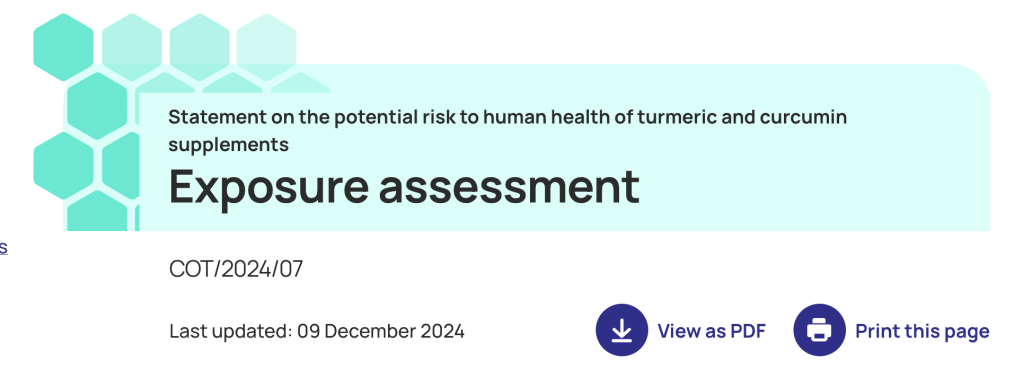
Molecular Mechanisms of Turmeric, Ginger, and Ceylon Cinnamon: There is much hype about turmeric and its most bioactive component known as curcumin. However, one must be very careful with the turmeric you purchase because there has been much tampering of it using vibrant yellow lead chromate, which is a concern in India. Over the past few years, the FDA has frozen sales of several different turmeric preparations (Cowell W, Ireland T, Vorhees D, Heiger-Bernays W. Ground Turmeric as a Source of Lead Exposure in the United States. Public Health Rep. 2017 May/Jun;132(3):289-293. doi: 10.1177/0033354917700109. Epub 2017 Mar 30. PMID: 28358991; PMCID: PMC5415259.). You should inquire if the turmeric you use or want to use has been screened for heavy metals,because heavy metal toxicity is not something to ignore. (click here to read the summary statement).
•Curcumin– Curcumin is a potent molecule with numerous points of interaction in neuronal cells. It was found that enhances the action of acetylcholine by a7-nACHR receptors, which provides a major source of neuroprotection. This interaction facilitates dopamine release due to ERK/MAPK activation, upregulation of CREB protein, and increased tyrosine hydroxylase. Next, activation of a7-nACHR by curcumin leads to an increase in intracellular calcium that modulates JAK2/STAT3 signaling, which leads to an upregulation of PKB and ultimately leads to the inhibition of NFkB. Furthermore, lipid signaling that begins with PKC activation through PI3K/Akt phosphorylation is responsible for modulating the neuroprotective and apoptotic factors. Which is the juggernaut that drives the biological benefit of curcumin? The widespread action of this compound does not allow one to conclude which activity is more important. Thus, it is now the pharmaceutical chemists’ role to prepare modified derivatives of curcumin to carefully dissect and understand the powerful influence of this molecule derived from turmeric in treating Parkinson’s.
One important enzyme not mentioned above that curcumin inhibits is cycloxygenase-2 (COX-2). COX-2 inhibitors treat inflammatory processes like arthritis, menstrual pain, and short-term pain from injuries. Thus, we can add curcumin as a nonsteroidal anti-inflammatory supplement (NSAID).
•Ginger– Ginger is also a multi-talented substance in modulating neuronal cells. Several substances within ginger give it this decisive action: zingerone, 6-gingerol and 6-shogaol. Similar to curcumin, ginger regulates NF-kB, MAPK, PI3K/Akt, ERK 1/2,and AMPK/PGC1a. The regulation of these many key transcriptional factors and signaling pathways suggests that ginger can help regulate neuroinflammation, oxidative stress, dopamine synaptic transmission, and even mitochondrial dysfunction in Parkinson’s.
•Ceylon Cinnamon– I have previously written about Ceylon cinnamon and its potential to be neuroprotective (click here Science Sunday: Cinnamon’s Neuroprotective Potential in Parkinson’s). Cinnamon is anti-inflammatory due to inhibition of p21, a significant cell signaling factor, which then down-regulates the key pro-inflammatory nuclear factor-kB (NF-kB) protein. It also provides neuroprotection and is linked to less NF-kB, then reduces the action of inducible nitric oxide synthase (iNOS) to lessen the generation of nitric oxide (NO). The reduction of NO helps renew the neuroprotective action of DJ-1 and Parkin. Furthermore, cinnamon modifies the levels of some neurotrophic factors [specificity, BDNF and NT-3, which are increased due to the activation of the protein kinase A-cAMP response element binding CREB) pathway.
“Poison is in everything, and no thing is without poison. The dosage makes it either a poison or a remedy.” Paracelsus
•Using Turmeric, Ginger, and Ceylon Cinnamon to Treat Parkinson’s: Collectively, turmeric (curcumin), ginger (zingerone, 6-gingerol and 6-shogaol), and Ceylon cinnamon (benzoate and catechin) provide a powerful modifying capacity of injured dopaminergic cells in Parkinson’s. The most active component of each spice can cross the blood-brain barrier. The breadth of signaling pathways and enzymes that are modified by these spices is quite extraordinary. Moreover, with all-natural products, there is hope that further refinement of the studies focused on Parkinson’s may reveal the true possibilities for these species to modify this neurodegenerative disorder. However, much work is needed, i.e., clinical trials, to further implicate the utility of these powerful Ayurvedic spices for treating Parkinson’s.
Medical Disclaimer: This blog post contains advice and information related to health care. It is not intended to replace medical advice. It should be used as a supplement rather than as a replacement for regular care from your Neurologist. Please discuss using these spices with your Family Physician or Neurologist before adding them to your treatment scheme.
“There is no evil in the world without a remedy.” Jacopo Sannazaro
Various Ways to Take Turmeric, Ginger, and Ceylon Cinnamon: The primary focus in this section is based on turmeric and curcumin, with a secondary role for ginger and Ceylon cinnamon.
In general, turmeric contains 2–8% curcumin, depending on the growing season and the form of turmeric. Thus, two teaspoons of turmeric powder (about 3 grams) typically contain about 30–90 milligrams of curcumin. Purified curcumin is generally described as turmeric root extract standardized to 95% curcuminoids. The turmeric and curcumin that are described here have been tested for contamination by heavy metals. The usual amount of turmeric (curcumin) to take is typically 500-2,000 mg/day,
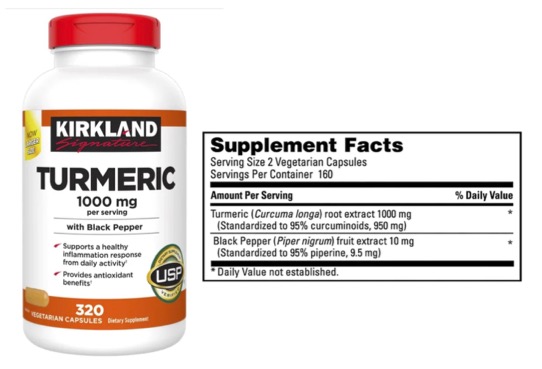
•Turmeric/Curcumin Supplements– A highly rated turmeric is the supplement from Costco (Kirkland Signature Turmeric 1000 mg, 320 Capsules, a daily dose of 2 capsules gave 950 mg curcuminoids, which gave 742 mg curcumin) and revealed no contamination with lead as reviewed by ConsumerLab.com. Currently, I am taking the PEA/turmeric complex from XGold Health, which provides 500 mg curcumin in one capsule. However, I can see switching or incorporating the Costco product into my daily regimen.

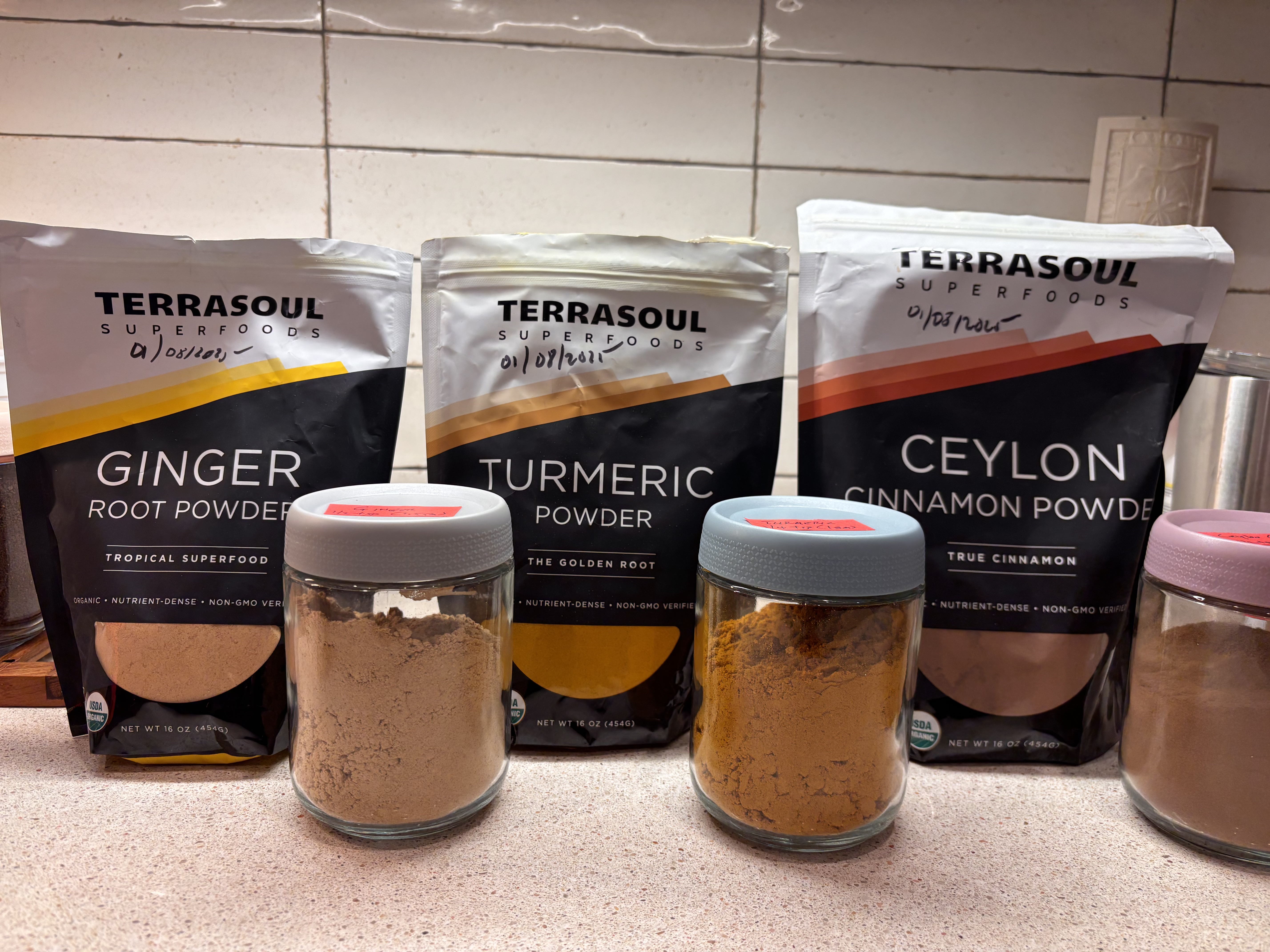
•Turmeric/Curcumin Powders-There are many different products advertised as turmeric powder or turmeric extract (standardized to 95% curcuminoids). As mentioned earlier, the availability of curcumin within turmeric is limited. Thus, one seeks ways to enhance the availability of the powder. Add a small amount of black pepper to increase the bioavailability of curcumin and turmeric; the active ingredient in black pepper is piperine. Add an oil or lipid (fatty acid) to help solubilize the turmeric and curcumin. Good examples are coconut oil and yogurt. Several recipes use turmeric or curcumin, ginger, and Ceylon cinnamon, usually using a carrier like yogurt, honey, coconut oil, and black pepper further to activate the curcumin.



Golden Yogurt #1
5-8 oz of your favorite yogurt (flavored or non-flavored)’ I find that vanilla yogurt blends in well flavor-wise with these spices, I like Oui yogurt)
1/2 tablespoon Georgia Gold turmeric*
1 teaspoon ginger
1/2 teaspoon Ceylon cinnamon
1/8 teaspoon black pepper
mix well in the yogurt container and enjoy
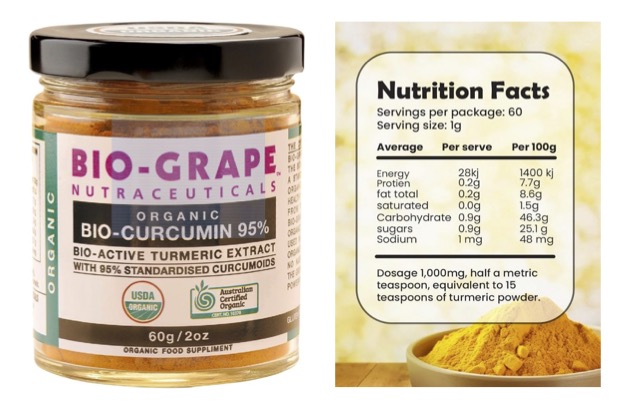
*If using a concentrated product like the Bio-Grape Bio-Curcumin (1/2 metric teaspoon contains up to 1000 mg curcumin), I suggest using either 1/8 to 1/4 teaspoon of this product).
Golden Yogurt #2 (modified from the American Turmeric Company blog (click here)
¾ cup of thick, Greek-style yogurt (I recommend unsweetened, plain yogurt like 2% FAGE)
1 tablespoon of Georgia Gold turmeric*
Drizzle of honey (local, if available)
Drizzle of extra virgin olive oil (enriches the yogurt)
Sprinkle of sea salt (highlights the sweetness of the honey)
Granola of your choice
Berries of your choice
*To further enhance this meal’s anti-inflammatory properties, I suggest adding 1 teaspoon ginger and 1/2 teaspoon Ceylon cinnamon.
Congealed Golden Honey
1/2 tablespoon Georgia Gold turmeric (or 1./2 teaspoon Bio-Grape Bio-Curcumin )
1 teaspoon ginger
1/2 teaspoon Ceylon cinnamon
1/8 teaspoon black pepper
2-3 tablespoons honey
mix components well in a glass or plastic container with a lid
add one tablespoon of liquified coconut oil (warmed up)
mix again, and store covered in the refrigerator
take 1/4-1/2 teaspoon by sublingual administration as needed.
Honey Laden with Gold
1/2 cup Honey
1 tablespoon Georgia Gold turmeric (or 1./2 teaspoon Bio-Grape Bio-Curcumin )
1 teaspoon ginger
1 teaspoon Ceylon cinnamon
1/4 teaspoon black pepper
mix well in a glass jar or plastic container with a lid
can be kept at room temperature
take 1/2-1 tablespoon as needed
Grief is itself a medicine.” William Cowper
Closing Thoughts: This blog post has been in the works for several weeks, primarily due to the meandering subject matter. These Ayurvedic spcies described here have real potential to help rectify our bodies of inflammation gone awry. Does turmeric, ginger, and Ceylon cinnamon have a place in your treatment scheme? The easiest way to take turmeric would be by an oral supplement; however, you would miss the wonderful flavors in the space. My mind is intrigued by Ayurveda and using the recipes described above more frequently.
“If a little dreaming is dangerous, the cure for it is not to dream less but to dream more, to dream all the time.” Marcel Proust
References:
Jaiswal YS, Williams LL. A glimpse of Ayurveda – The forgotten history and principles of Indian traditional medicine. J Tradit Complement Med. 2016 Feb 28;7(1):50-53. doi: 10.1016/j.jtcme.2016.02.002. PMID: 28053888; PMCID: PMC5198827.
Narayanaswamy V. Origin and development of Ayurveda: (a brief history). Anc Sci Life. 1981 Jul;1(1):1-7. PMID: 22556454; PMCID: PMC3336651.
Nebrisi EE. Neuroprotective Activities of Curcumin in Parkinson’s Disease: A Review of the Literature. Int J Mol Sci. 2021 Oct 18;22(20):11248. doi: 10.3390/ijms222011248. PMID: 34681908; PMCID: PMC8537234.
Hatami M, Abdolahi M, Soveyd N, Djalali M, Togha M, Honarvar NM. Molecular Mechanisms of Curcumin in Neuroinflammatory Disorders: A Mini Review of Current Evidences. Endocr Metab Immune Disord Drug Targets. 2019;19(3):247-258. doi: 10.2174/1871530319666181129103056. PMID: 30488803.
Vallianou NG, Evangelopoulos A, Schizas N, Kazazis C. Potential anticancer properties and mechanisms of action of curcumin. Anticancer Res. 2015 Feb;35(2):645-51. PMID: 25667441.
Dhasmana A, Uniyal S, Anukriti, Kashyap VK, Somvanshi P, Gupta M, Bhardwaj U, Jaggi M, Yallapu MM, Haque S, Chauhan SC. Topological and system-level protein interaction network (PIN) analyses to deduce molecular mechanism of curcumin. Sci Rep. 2020 Jul 21;10(1):12045. doi: 10.1038/s41598-020-69011-0. PMID: 32694520; PMCID: PMC7374742.
She R, Xu P. Mechanism of curcumin in the prevention and treatment of oral submucosal fibrosis and progress in clinical application research. BDJ Open. 2024 Oct 25;10(1):82. doi: 10.1038/s41405-024-00268-7. PMID: 39455570; PMCID: PMC11512022.
Cole GM, Teter B, Frautschy SA. Neuroprotective effects of curcumin. Adv Exp Med Biol. 2007;595:197-212. doi: 10.1007/978-0-387-46401-5_8. PMID: 17569212; PMCID: PMC2527619.
`Shen CL, Wang R, Yakhnitsa V, Santos JM, Watson C, Kiritoshi T, Ji G, Hamood AN, Neugebauer V. Gingerol-Enriched Ginger Supplementation Mitigates Neuropathic Pain via Mitigating Intestinal Permeability and Neuroinflammation: Gut-Brain Connection. Front Pharmacol. 2022 Jul 8;13:912609. doi: 10.3389/fphar.2022.912609. PMID: 35873544; PMCID: PMC9305072.
Simon A, Darcsi A, Kéry Á, Riethmüller E. Blood-brain barrier permeability study of ginger constituents. J Pharm Biomed Anal. 2020 Jan 5;177:112820. doi: 10.1016/j.jpba.2019.112820. Epub 2019 Aug 19. PMID: 31476432.
Pahan P, Pahan K. Can cinnamon bring aroma in Parkinson’s disease treatment? Neural Regen Res. 2015 Jan;10(1):30-2. doi: 10.4103/1673-5374.150647. PMID: 25788911; PMCID: PMC4357107.
Angelopoulou E, Paudel YN, Papageorgiou SG, Piperi C. Elucidating the Beneficial Effects of Ginger (Zingiber officinale Roscoe) in Parkinson’s Disease. ACS Pharmacol Transl Sci. 2022 Sep 7;5(10):838-848. doi: 10.1021/acsptsci.2c00104. PMID: 36268117; PMCID: PMC9578130.
Angelopoulou E, Nath Paudel Y, Piperi C, Mishra A. Neuroprotective potential of cinnamon and its metabolites in Parkinson’s disease: Mechanistic insights, limitations, and novel therapeutic opportunities. J Biochem Mol Toxicol. 2021 Feb 15:e22711. doi: 10.1002/jbt.22711. Epub ahead of print. PMID: 33587308.
Arcusa R, Villaño D, Marhuenda J, Cano M, Cerdà B, Zafrilla P. Potential Role of Ginger (Zingiber officinale Roscoe) in the Prevention of Neurodegenerative Diseases. Front Nutr. 2022 Mar 18;9:809621. doi: 10.3389/fnut.2022.809621. PMID: 35369082; PMCID: PMC8971783.
Momtaz S, Hassani S, Khan F, Ziaee M, Abdollahi M. Cinnamon, a promising prospect towards Alzheimer’s disease. Pharmacol Res. 2018 Apr;130:241-258. doi: 10.1016/j.phrs.2017.12.011. Epub 2017 Dec 16. PMID: 29258915.
Bae WY, Choi JS, Jeong JW. The Neuroprotective Effects of Cinnamic Aldehyde in an MPTP Mouse Model of Parkinson’s Disease. Int J Mol Sci. 2018 Feb 12;19(2):551. doi: 10.3390/ijms19020551. PMID: 29439518; PMCID: PMC5855773.
Jana A, Modi KK, Roy A, Anderson JA, van Breemen RB, Pahan K. Up-regulation of neurotrophic factors by cinnamon and its metabolite sodium benzoate: therapeutic implications for neurodegenerative disorders. J Neuroimmune Pharmacol. 2013 Jun;8(3):739-55. doi: 10.1007/s11481-013-9447-7. Epub 2013 Mar 9. PMID: 23475543; PMCID: PMC3663914.
“Laugh at yourself and at life. Not in the spirit of derision or whining self-pity, but as a remedy, a miracle drug, that will ease your pain, cure your depression, and help you to put in perspective that seemingly terrible defeat… Never take yourself too seriously.” Og Mandino
Cover Photo Image by Dimitris Vetsikas from Pixabay
 Journey with Parkinson's