
“Water is life’s matter and matrix, mother and medium. There is no life without water.” Albert Szent-Gyorgyi
“Thousands have lived without love, not one without water.” W. H. Auden
Introduction: We are experiencing unrivaled and sustained summer heat in parts of the USA. While everyone needs to stay hydrated in such situations, it is vital for someone with Parkinson’s. Dehydration can worsen neurological conditions; thus, the health of a person-with-Parkinson’s (PwP) can be compromised by dehydration.
This blog post is not meant to tell you how best to stay hydrated. This post aims to tell you about the potential complications of becoming dehydrated while living with Parkinson’s.
“If there is magic on this planet, it is contained in water.” Loren Eiseley
The Common Sense Part of Staying Hydrated: We all know we need 6-8 glasses of water daily. This translates to approximately 2 quarts of water or slightly less than 2 liters daily. There are a few precautions you can take to avoid dehydration. A recommended daily plan is to drink a glass of water with each meal and drink water throughout the day, especially when outside in the summer heat or when exercising. In my opinion, there is nothing more refreshing than a glass of ice-cold water.
“It is life, I think, to watch the water. A man can learn so many things.” Nicholas Sparks
Water is in the Human Body: We are mostly made of water. About 60% of the human body is water. And what does this water do for us (here are a few examples)? It helps deliver oxygen in the blood to cells; regulates body temperature; forms saliva necessary for digestion; flushes body waste primarily as urine; lubricates joints; allows body cells to grow and replicate. Simply stated, water is the major component of most body parts.
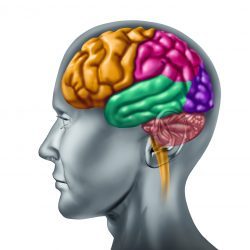
In 1945, Mitchell and associates [Mitchell, H. H., T. S. Hamilton, F. R. Steggerda, and H. W. Bean. “The chemical composition of the adult human body and its bearing on the biochemistry of growth.” Journal of Biological Chemistry 158, no. 3 (1945): 625-637] determined the amount of water in the human body. This group reported that the brain and heart are each composed of ~73% water, and the lungs are about 83% water. This may seem like a huge percentage, but water is crucial for many physiological functions, as mentioned above. Thus, dehydration can cause fatigue, promote headaches, lead to a lack of mental clarity, amplify stress, and contribute to sleep issues. And this is further magnified if one is an aging adult or a PwP.
“In time and with water, everything changes.” Leonardo da Vinci
Hydration Issues in the Aging Population: We define dehydration as a 1% or more significant body weight loss due to fluid loss. Dehydration occurs due to reduced thirst sensation and fluid intake or excessive excretion.
Older adults are more prone to dehydration for several reasons. Appetite and thirst lessen with age. Thus, we drink less water, reducing the overall water percentage in our bodies. And older adults are more likely to take prescription drugs, some promoting dehydration. As one can see this scenario shaping up, studies have shown that many older adults are chronically dehydrated, and the effort to stay effectively hydrated gets more difficult as we age. If we are prone to drink less water with aging, then (trying to) be proactive about increasing your water intake is essential.
“Water is the soul of the Earth.” W. H. Auden
Hydration Problems in PwP: Dehydration can reduce cognition, affect balance, and promote an imbalanced gait. Does this not sound like Parkinson’s? Thus, dehydration can exacerbate existing symptoms of Parkinson’s. Partly, PwP are more susceptible to dehydration due to their age (as just mentioned), many have difficulty in swallowing (try using a straw for drinking water), and some medications can lead to nausea, which can reduce drinking water.
Importantly, Cassani and colleagues [Cassani, Erica, Michela Barichella, Valentina Ferri, Giovanna Pinelli, Laura Iorio, Carlotta Bolliri, Serena Caronni et al. “Dietary habits in Parkinson’s disease: adherence to Mediterranean diet.” Parkinsonism & related disorders 42 (2017): 40-46.] reported that PwP with a swallowing defect ( dysphagia ) drank less than 50% of the recommended amount of water each day.
An essential facet of Parkinson’s, with or without medical prescriptions, is lowered blood pressure (or hypotension). So, a PwP who stays chronically dehydrated would result in hypotension from reduced blood volume (remember, there is a lot of water in the blood). Therefore, if low blood pressure happens when changing positions (orthostatic hypotension) in Parkinson’s, becoming dehydrated would create a problematic scenario for the PwP.
“Promise me you will not spend so much time treading water and trying to keep your head above the waves that you forget, truly forget, how much you have always loved to swim.” Tyler Knott Gregson
A Personal Example: Two years ago, with my usual Sunday golf group, I experienced heat exhaustion. About halfway through the round, it was a typical hot and humid summer day, and I noticed I had stopped sweating. Then I got dizzy. I quickly realized what was happening. I returned to the air-conditioned clubhouse, used ice packs to cool down, drank water and Gatorade, and waited for my friends to finish. I felt okay by then, but we decided a trip to the Emergency Department was necessary. A few hours later, I was sent home after a saline infusion and an EKG to check my heart function. All was normal, and no damage was done. The moral to the story- drinking fluids the night before, the morning of, and continually while out in the summer’s heat will all contribute to reducing the risk of dehydration and its potentially detrimental outcome. I learned a valuable lesson.
“Water, thou hast no taste, no color, no odor; canst not be defined, art relished while ever mysterious. Not necessary to life, but rather life itself, thou fillest us with a gratification that exceeds the delight of the senses.” Antoine de Saint-Exupery
SUDPAR Revisited: In 2022, I posted a blog on Sudden Unexpected Death in Parkinson’s (SUDPAR) (click here to read this post). An article by Menezes-Rodrigues and colleagues [Menezes-Rodrigues, Francisco S., Cristiane S. Scorza, Ana C. Fiorini, Afonso Caricati-Neto, Carla A. Scorza, Josef Finsterer, and Fulvio A. Scorza. “Sudden unexpected death in Parkinson’s disease: why is drinking water important?.” Neurodegenerative Disease Management 9, no. 4 (2019): 241-246] focused their study on the risk of dehydration linked to SUDPAR. One difficulty with ‘studying’ SUDPAR is that death is the endpoint. Logically thinking, a PwP would likely need a vastly perturbed cardiovascular/neurovascular system that could rapidly promote death. Thus, adding dehydration to the possible causes of SUDPAR seems logical. However, reading and re-reading this paper is not proof of the principle. More work is needed to identify dehydration as a promoter of SUDPAR.
“We never know the worth of water till the well is dry.” Thomas Fuller
A Closing Thought: Living with Parkinson’s is a different life path with many obstacles. Please be aware that staying hydrated is crucial to normal neurological function. Becoming dehydrated will worsen everything for PwP as if we need to add to our burden. Three words for the current summer, drink more water.
“Water does not resist. Water flows. When you plunge your hand into it, all you feel is a caress. Water is not a solid wall, it will not stop you. But water always goes where it wants to go, and nothing in the end can stand against it. Water is patient. Dripping water wears away a stone. Remember that, my child. Remember you are half water. If you can’t go through an obstacle, go around it. Water does.” Margaret Atwood
Cover Photo Image by rony michaud from Pixabay
 Journey with Parkinson's
Thank you for the reminder to drink water.
I have trouble managing the heat now that I have Parkinson’s (Yopd at 48, DBS Nov 2020, 7 years & counting ). The summers are hot and humid in Minnesota. I can’t imagine, living in North Carolina again and not being inside all the time .I don’t think I could handle the summers anymore. I’m curious if my issue with heat has to do with the autonomic system of temperature management and/ or dehydration? I’d love to hear your thoughts on this.
LikeLike
Saralitta. I think it is a combination of not drinking enough water as we age and the autonomic nervous system (ANS) defect accompanying Parkinson’s. For instance, when I play 18 holes of golf, I make myself drink some water after every hole. Otherwise, I probably would not. This is not right, clearly, a problem with me as I age with Parkinson’s. No doubt, I also feel a difference in my body’s response to hot and cold temperatures. I used to be able to handle hot weather, and clearly, that is a deficiency to some extent. Cold weather is harder for me than ever, I can shiver uncontrollably in cold weather.So for me, without going into the science, I know my ANS is not in-line with what it should be capable of doing. I am trying to learn more about the functioning of the ANS system to write a blog post on it. Learning about Parkinson’s is like peeling an onion, it is just layer after layer of information accompanied by an entire messenger system that is dysfunctional. Best wishes, Frank
LikeLike