

“Be the kind of person who takes supplements – then skip the supplements.” Michael Pollan
“One, I am skeptical of the effectiveness of nutritional supplements.” Michael Shermer
Supplementing Our Treatment Plan: We all contribute to this collective knowledge, using various supplements and over-the-counter compounds to manage our Parkinson’s. Besides exercise, what other strategies can we share to maintain our quality of life (QoL)?
Of course, many of our Neurologists and Movement DIsorder Specialists frown on us using said supplements, and I am never sure why. Is it because they need to follow the Complementary & Alternative Medicine (CAM) literature to understand what we want to use and why? Is it because they think we are harming our bodies? I do not have a reasonable answer except that I have been fortunate to have two supportive Movement Disorder Specialists who have let me wander endlessly regarding the use of supplements for treating my Parkinson’s. My NC-based Neurologist would challenge me with the mechanism of such supplements to better understand the logic or reason for this substance.
Ultimately, I figure if I can find a supplement or an OTC (over-the-counter) strategy that works, then I have hopefully bought myself some additional days of life in the presence of Parkinson’s, and maybe even I have improved my QoL.
“Weaknesses and deficiencies . . . play a most important part in all our lives. It is because of them that we need others and others need us. We are not all weak in the same spots, and so we supplement and complete one another, each one making up in himself for the lack in another.” Thomas Merton
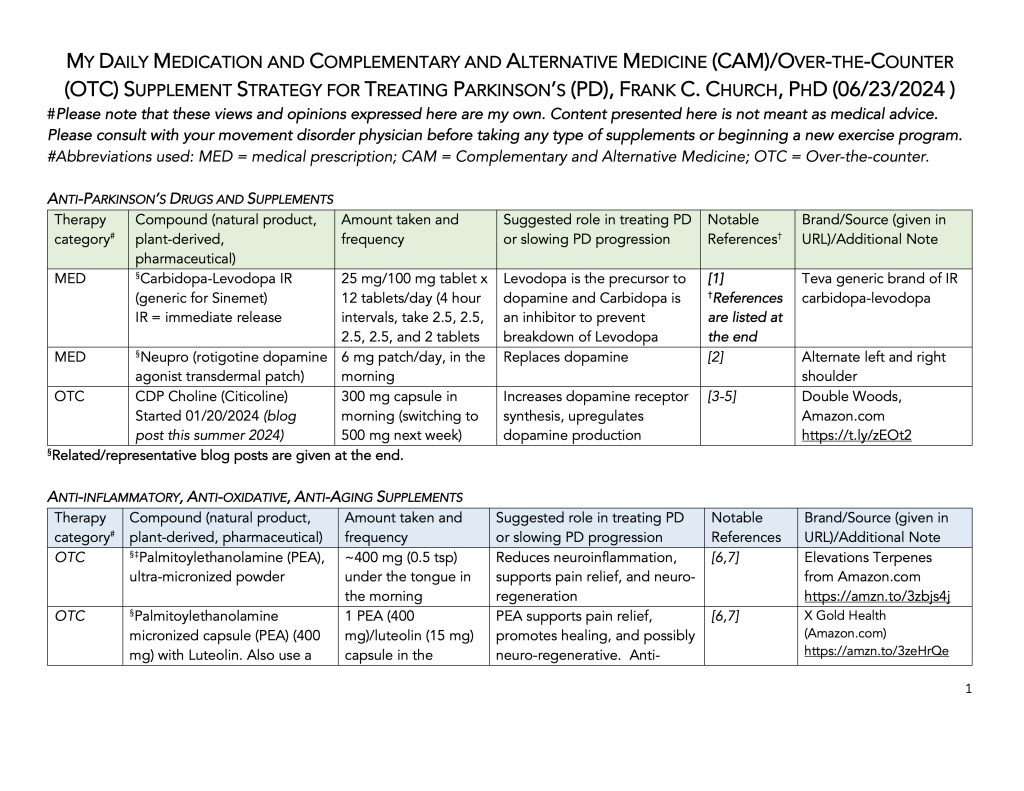
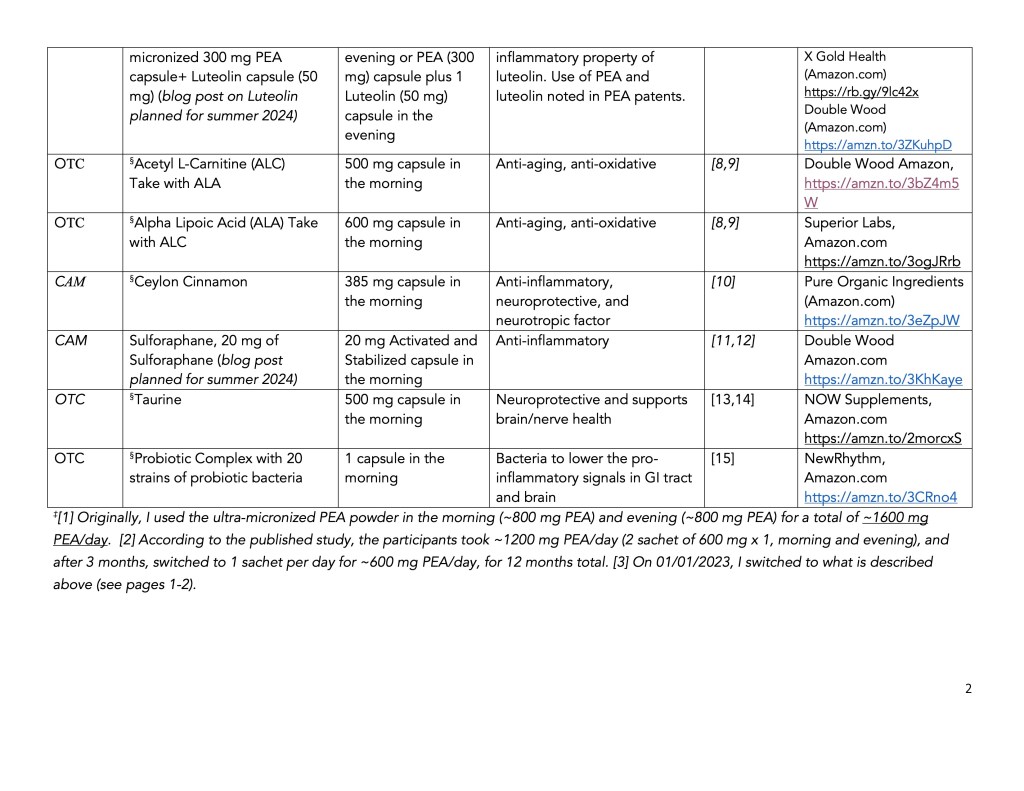
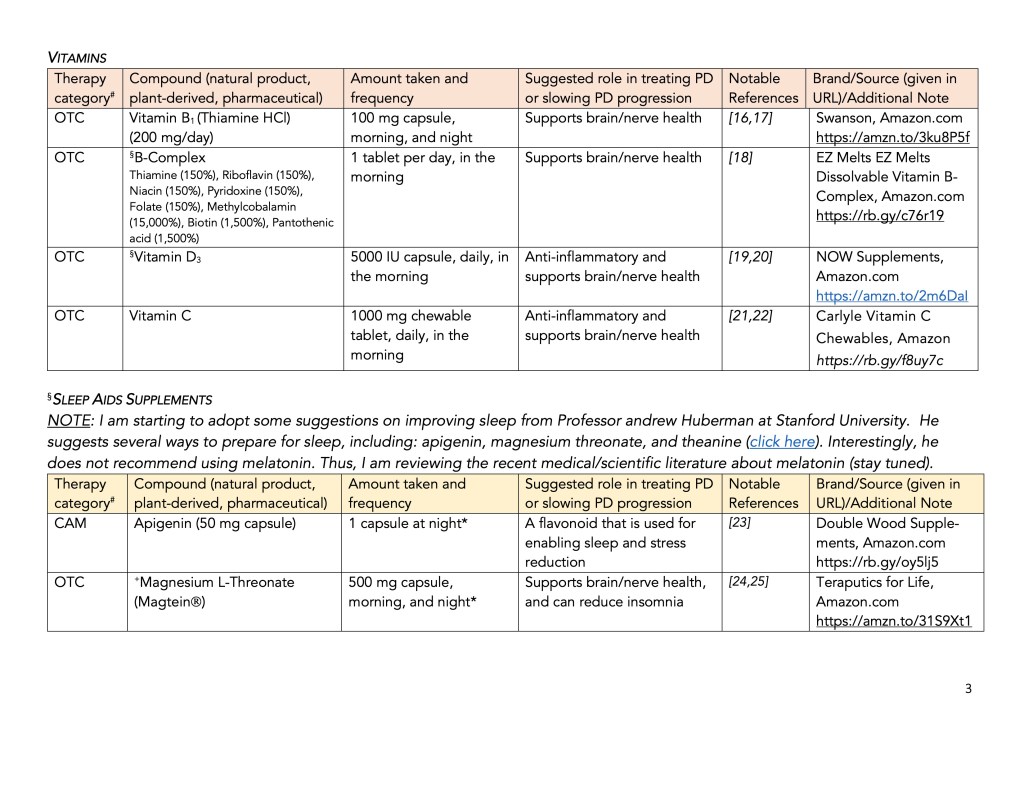
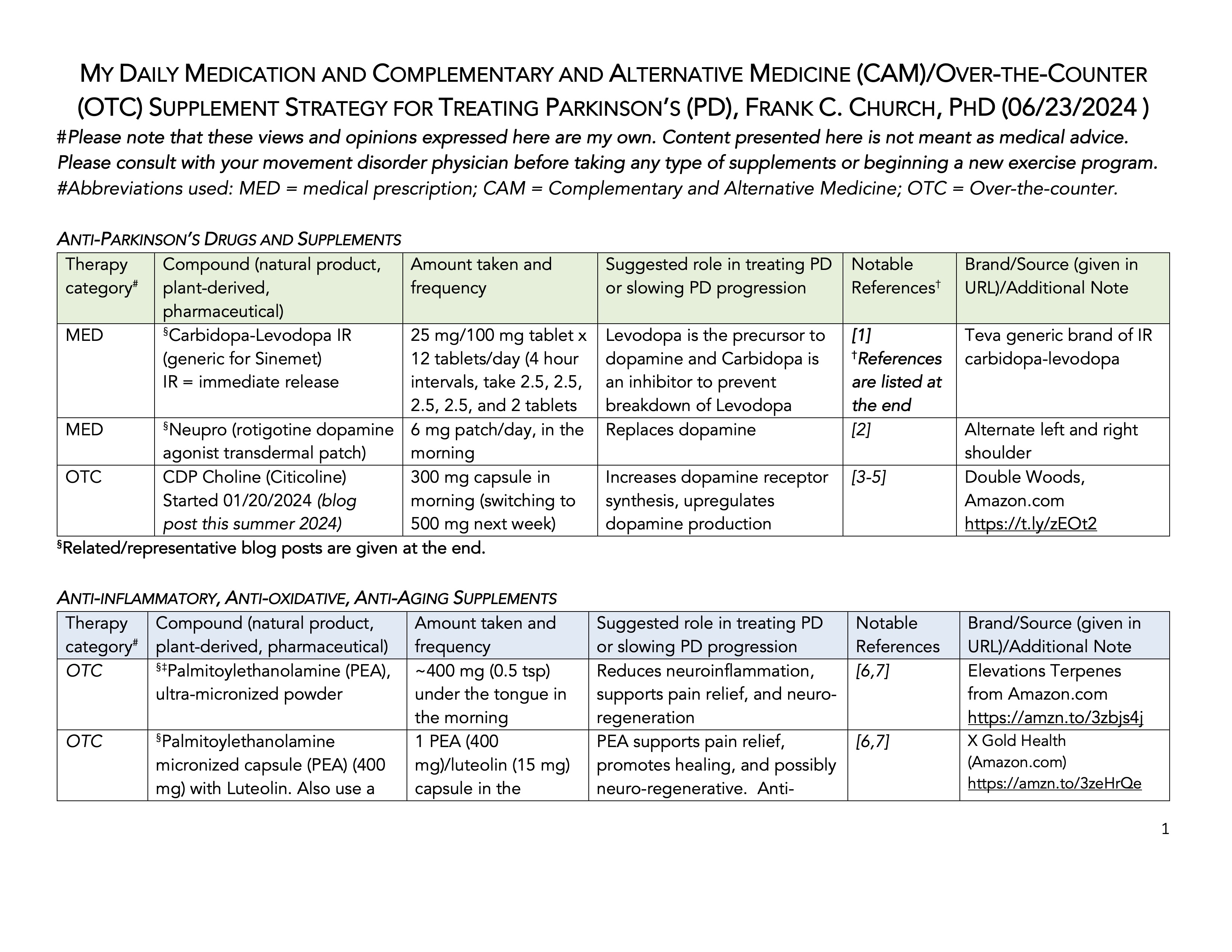
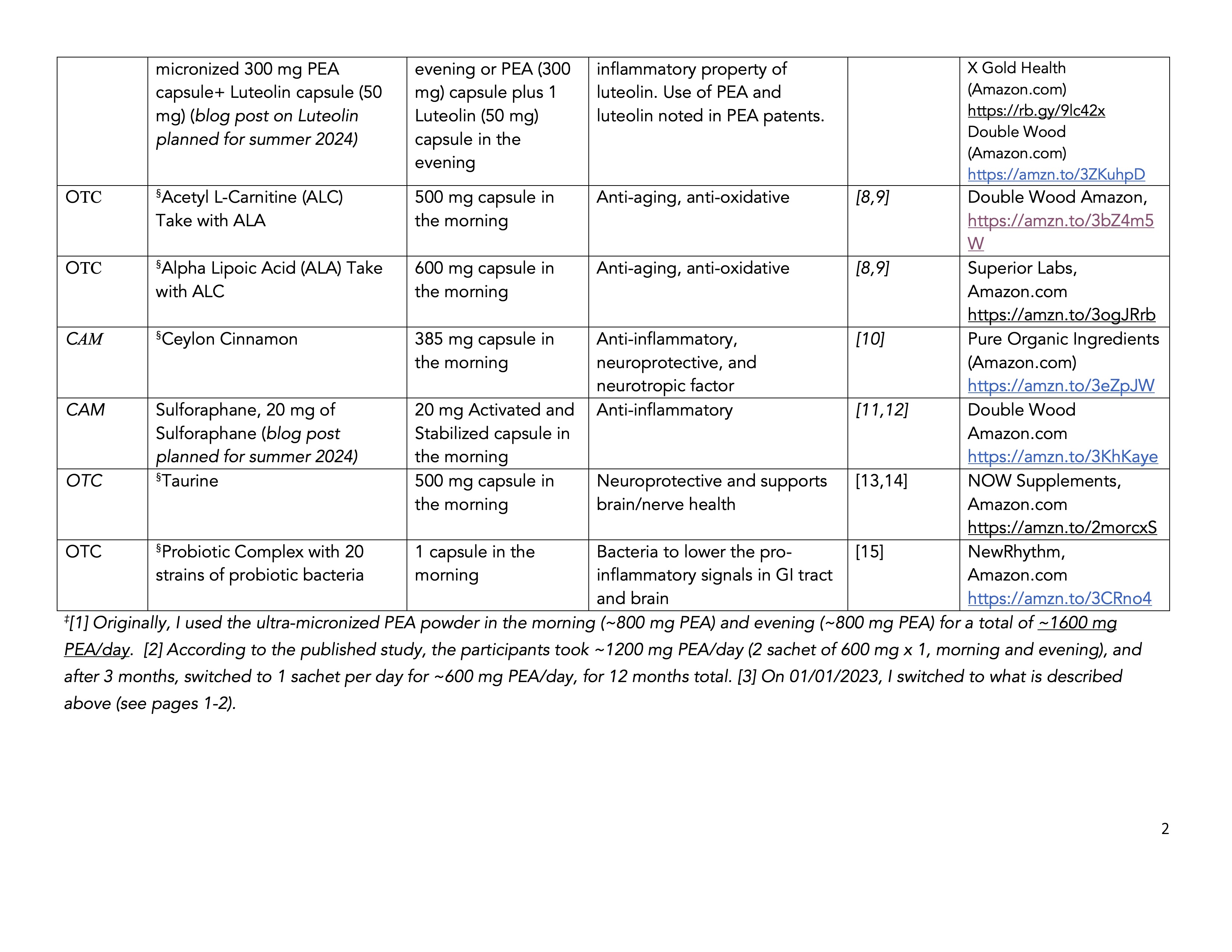
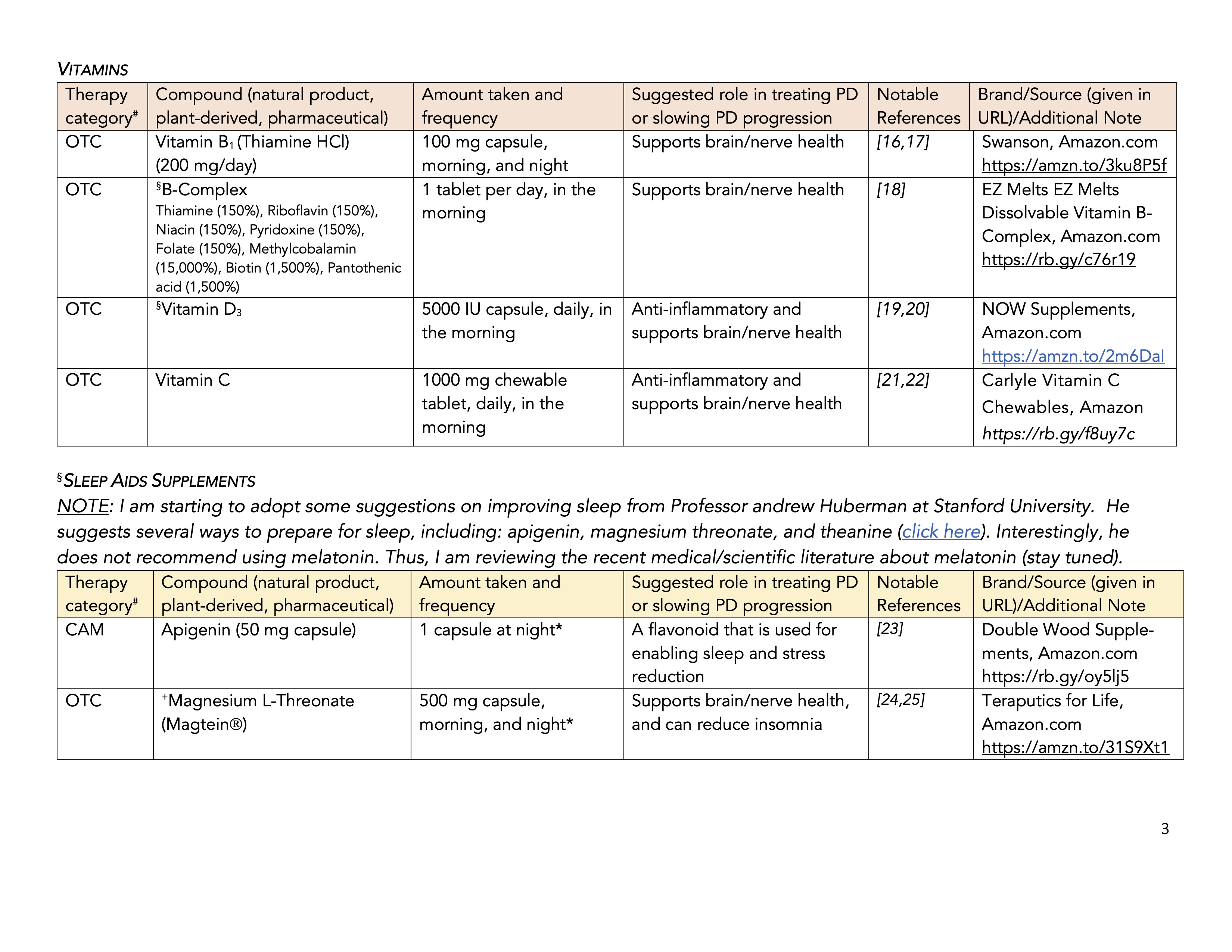
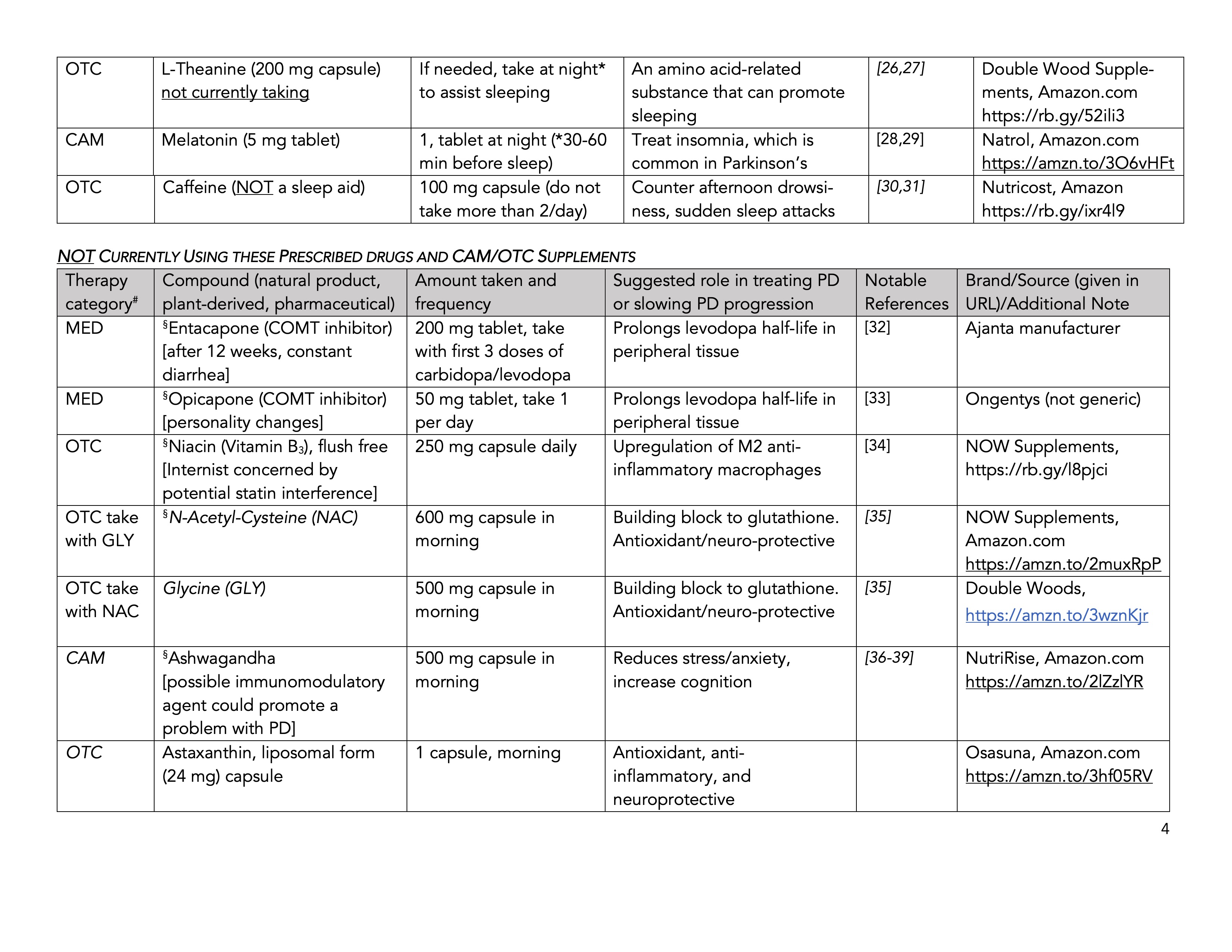
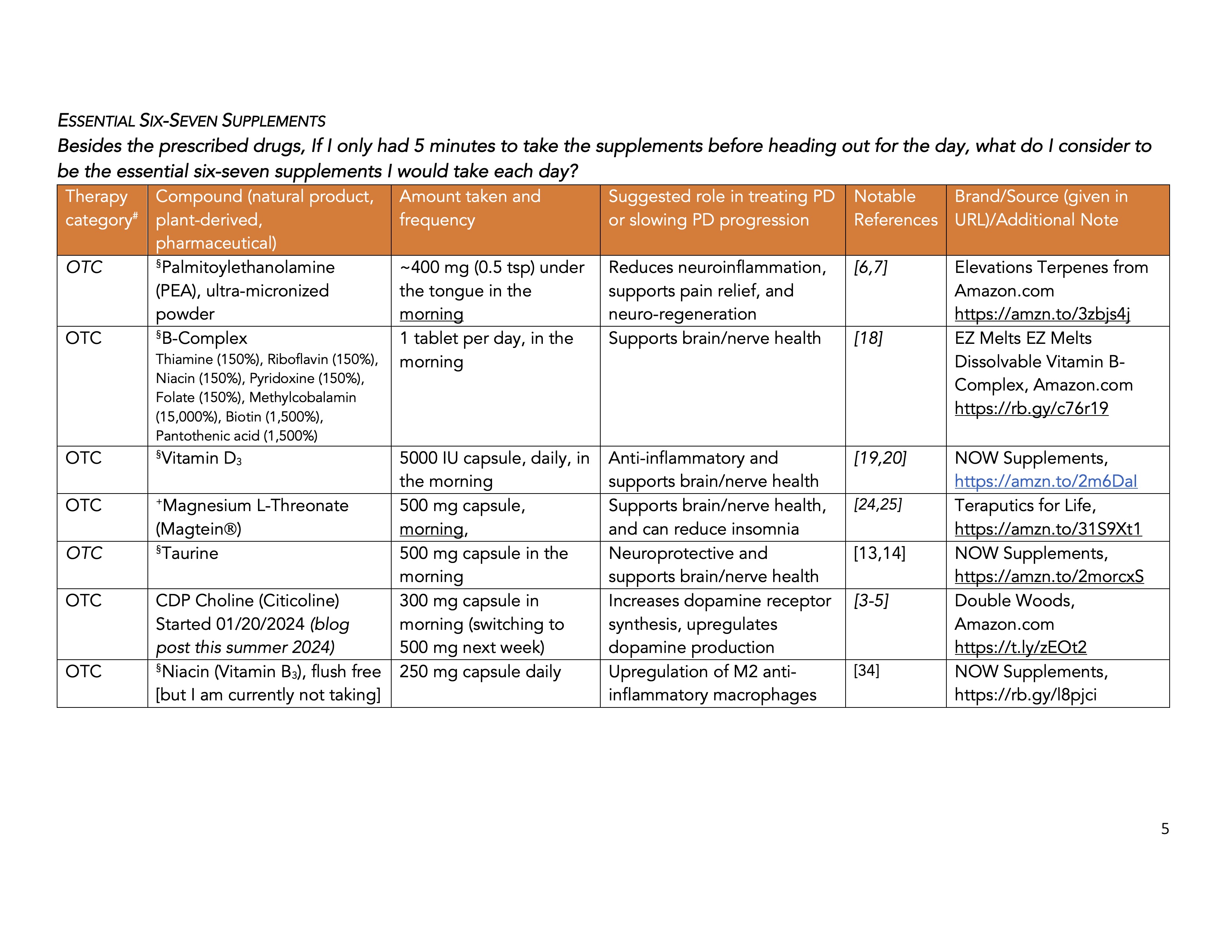
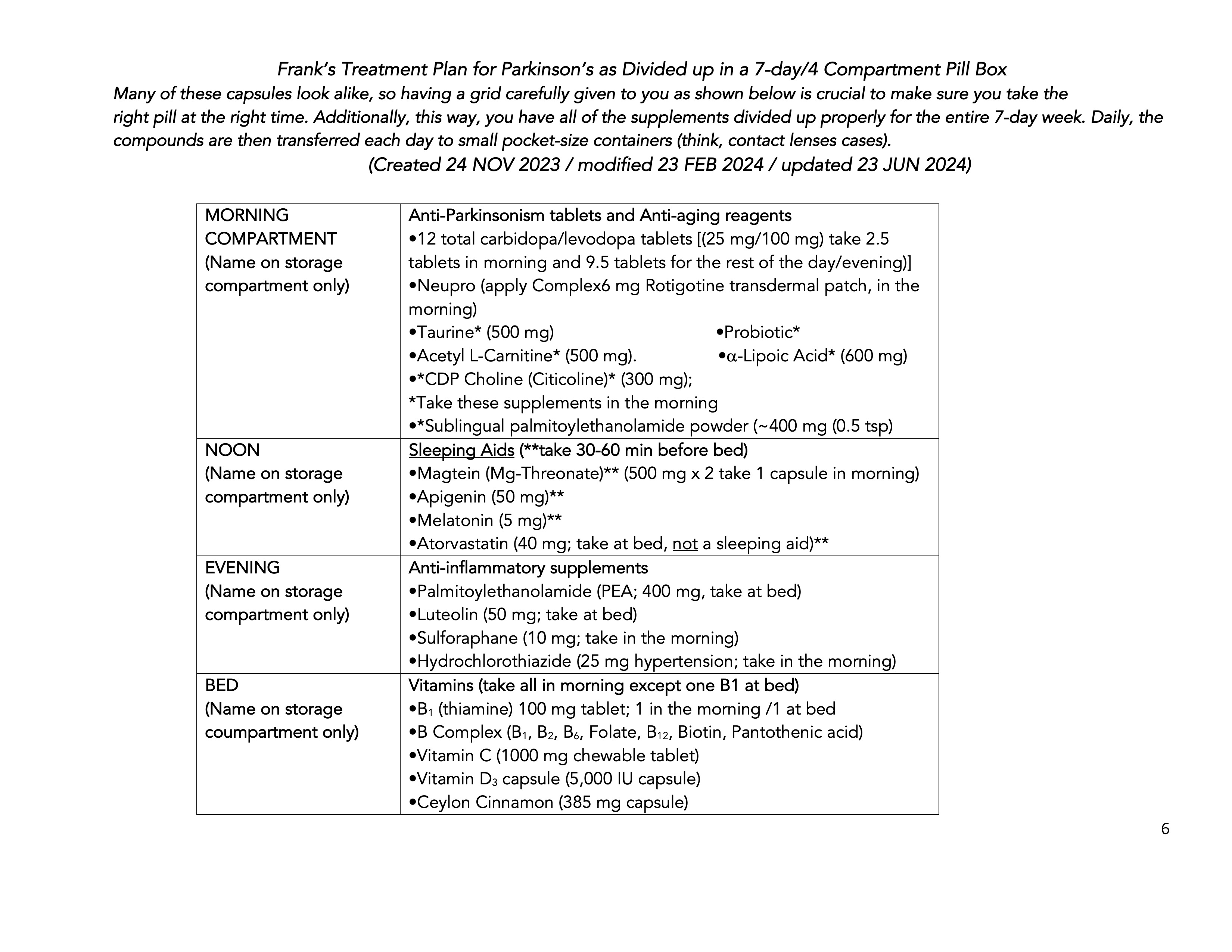
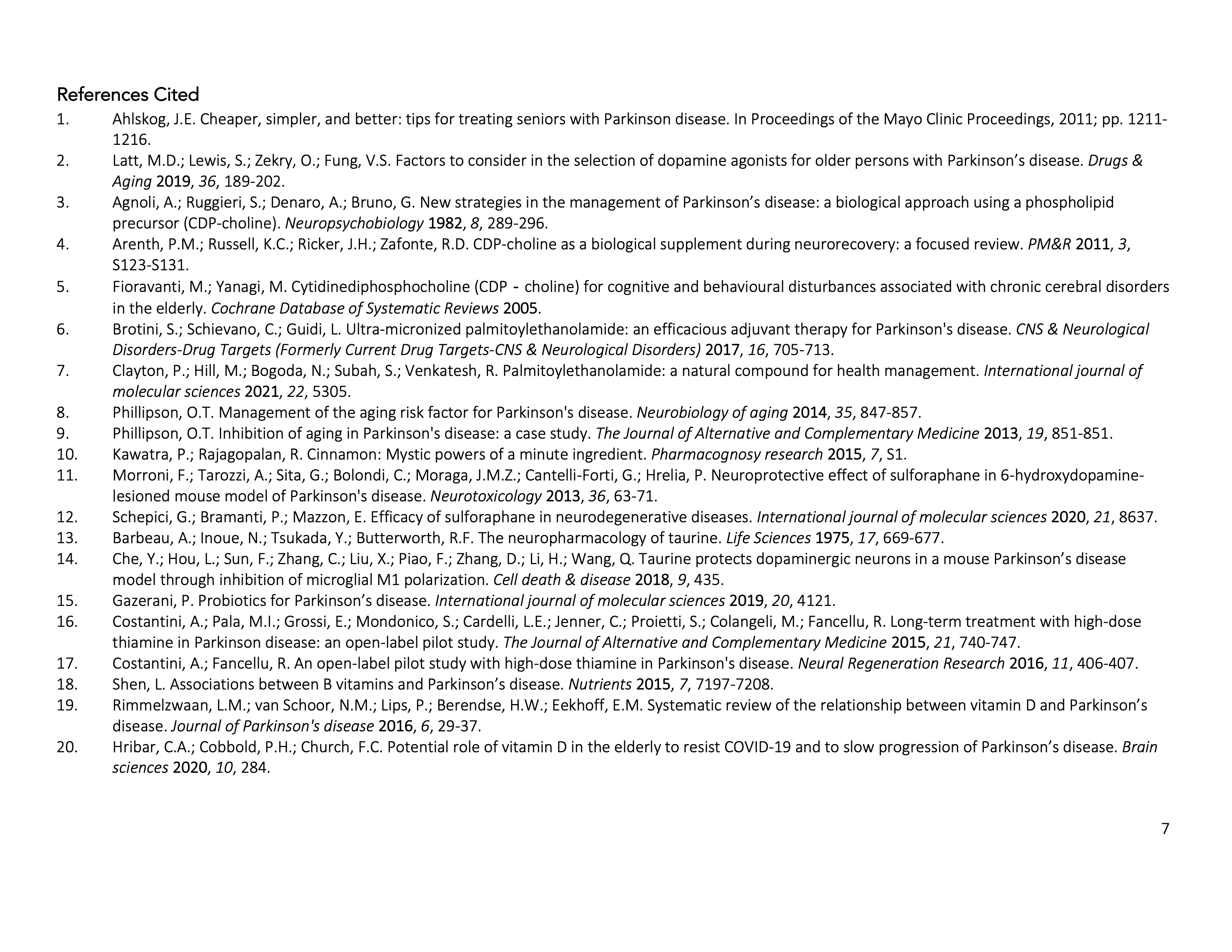
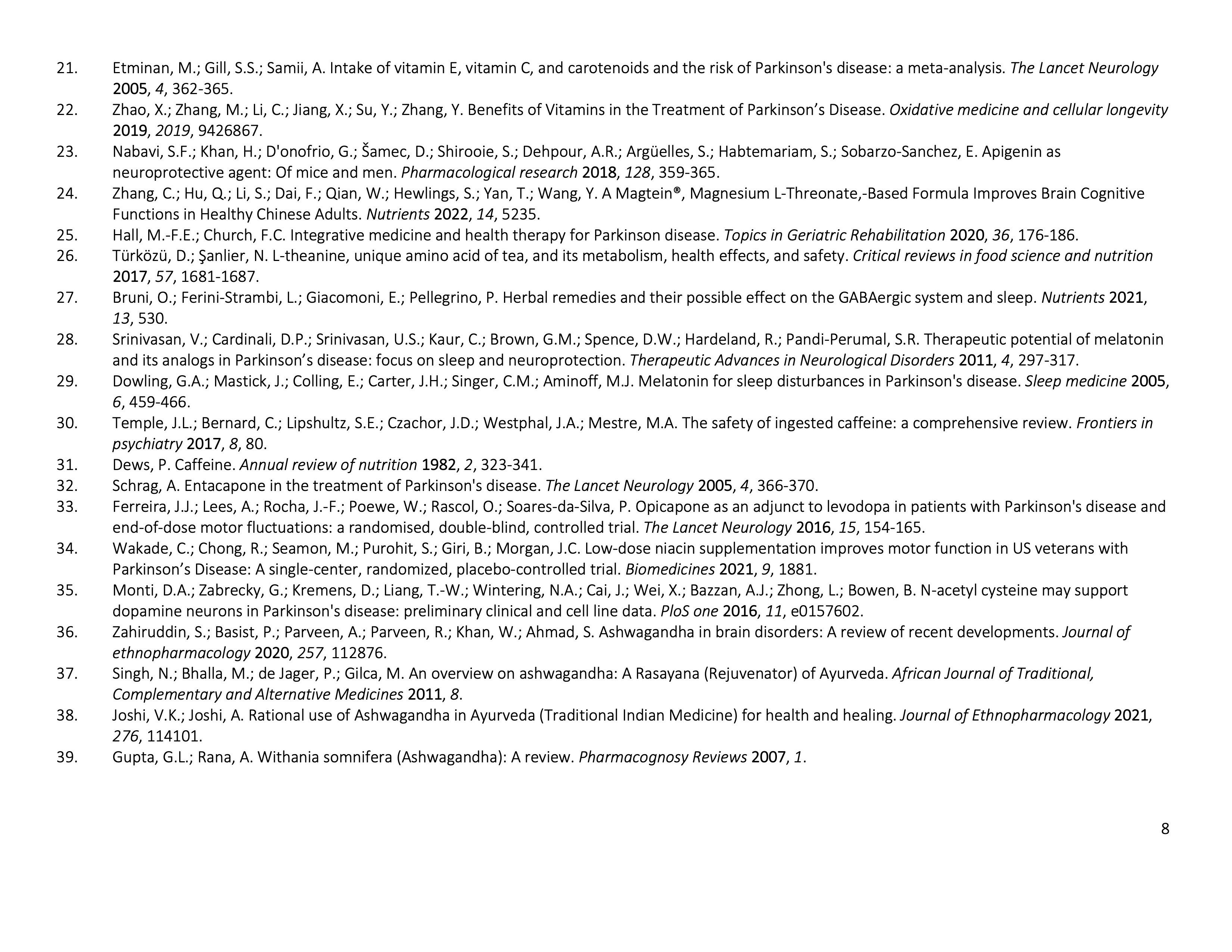
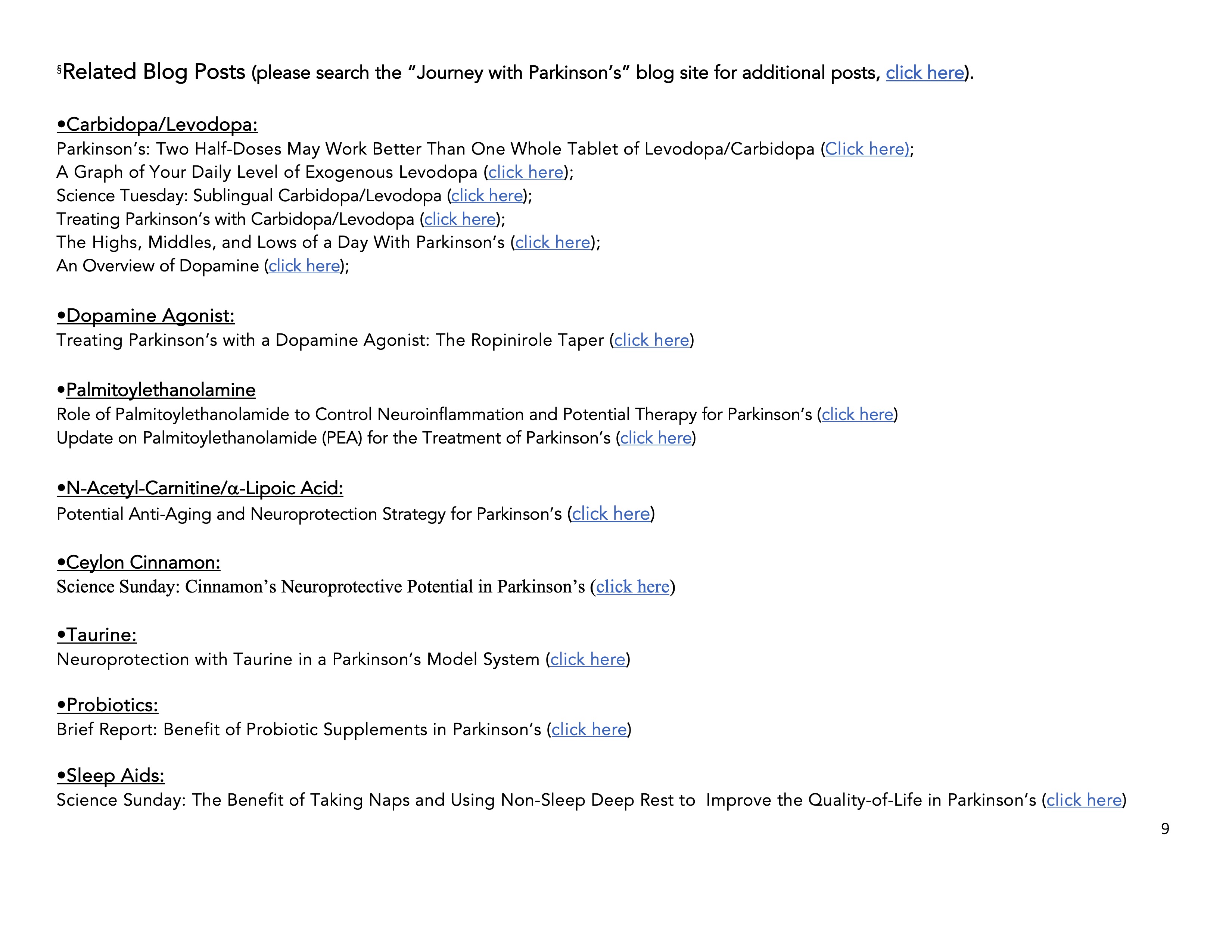
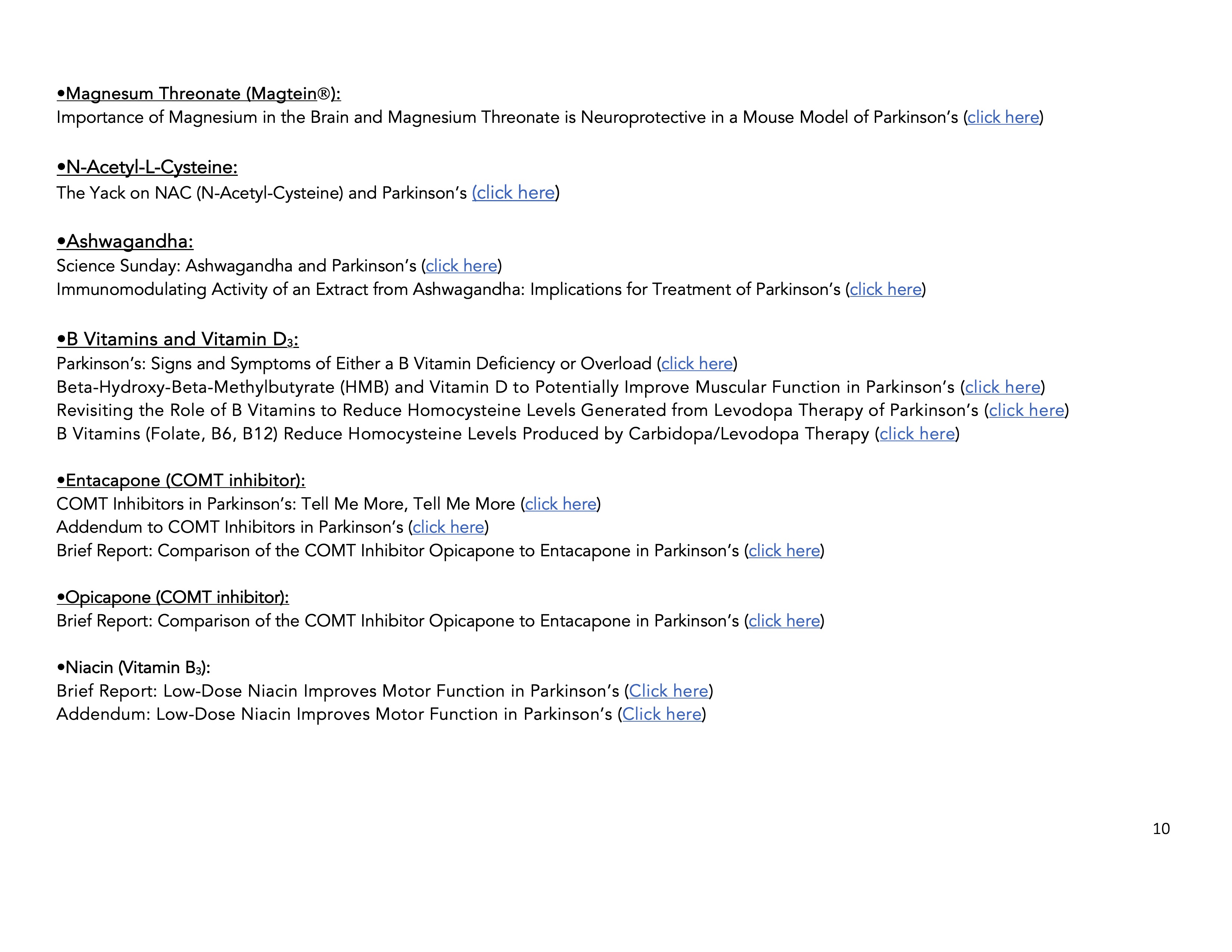
Describing my Strategy for Treating Parkinson’s: In the latest update, I have broken down the use of any supplements and OTC compounds based on their action, including anti-Parkinson’s activity, Anti-inflammatory/Anti-oxidative/Anti-Aging Supplements, Vitamins, and Sleep aid Supplements. There is a list of supplements I no longer take and an essential six-seven supplements list. Along with these supplements are the source and amount I routinely take, the putative biological roles of these substances, valuable reference citations/reviews, and a list of previous blog posts on the topic of the drug/supplement.
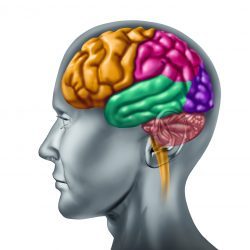
I envision a brain with Parkinson’s as an organ that is continually inflamed, poorly functioning, and in need of additional energy stores. This brain has damaged and dying neuronal cells seeking sanctuary to recover, and it is losing both strength and awareness with each stroke of the body’s clock.
In the absence of a cure, the best we can do is assist the brain’s attempt to counter and withstand the relentless assault from Parkinson’s. Besides exercise and living a strong, persistent, and mindful life, adding supplements to your daily intake is one path I believe helps.
I feel there is a need for anti-inflammatory substances, anti-oxidative, anti-aging supplements, and cellular constituents to act as building blocks so the neuronal cells can use them. These agents would include vitamins and cellular components like palmitoylethanolamide and CDP-choline.
These battleground components are likely different in our brains, reflected in our different motor- and non-motor-related symptoms. Thus, the nuances of each person’s disorder suggest that an individual supplement plan would be ideal. However, this is impossible since we do not know the biological origin of all of these symptoms. Therefore, we take various supplements hoping to alleviate or reverse some of our ailments and symptoms broadly.
“All art, all education, can be merely a supplement to nature.” Aristotle
My Current List of CAM/OTC Supplements:
To download the entire 10-page file in PDF format, click here.
Each individual page in JPEG format is given below. Either click on the image itself to download or click on each page listed here:
This is Page 1, Page 2, Page 3, Page 4, Page 5, Page 6, Page 7, Page 8, Page 9, Page 10.
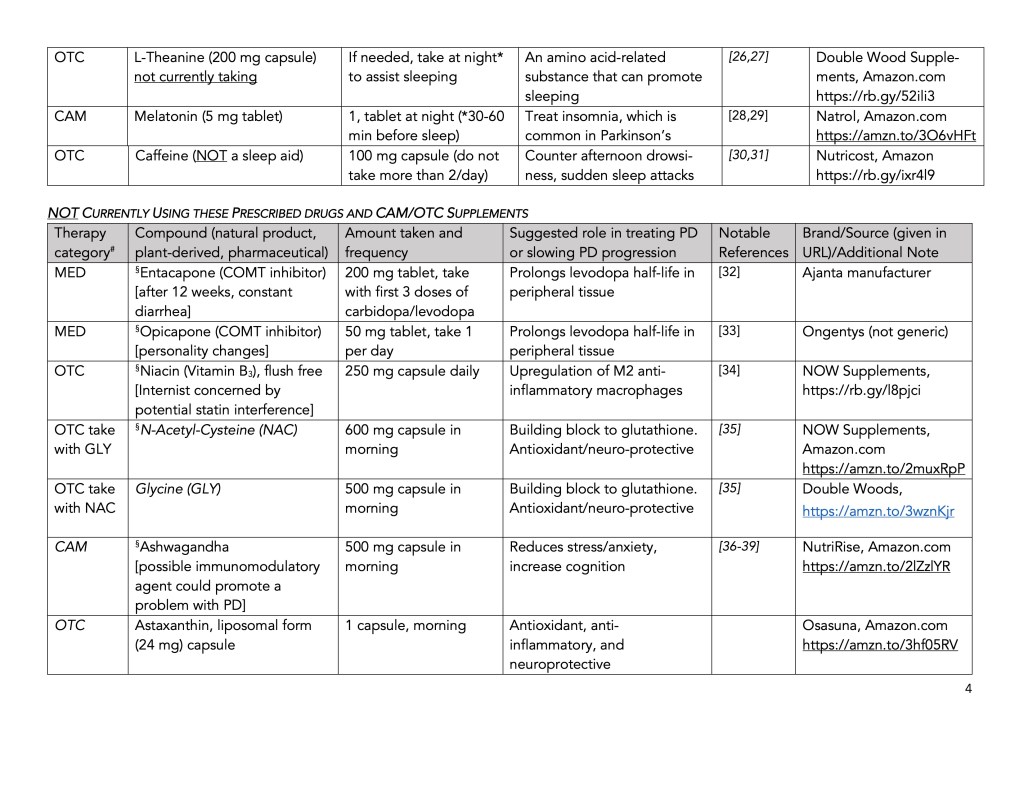
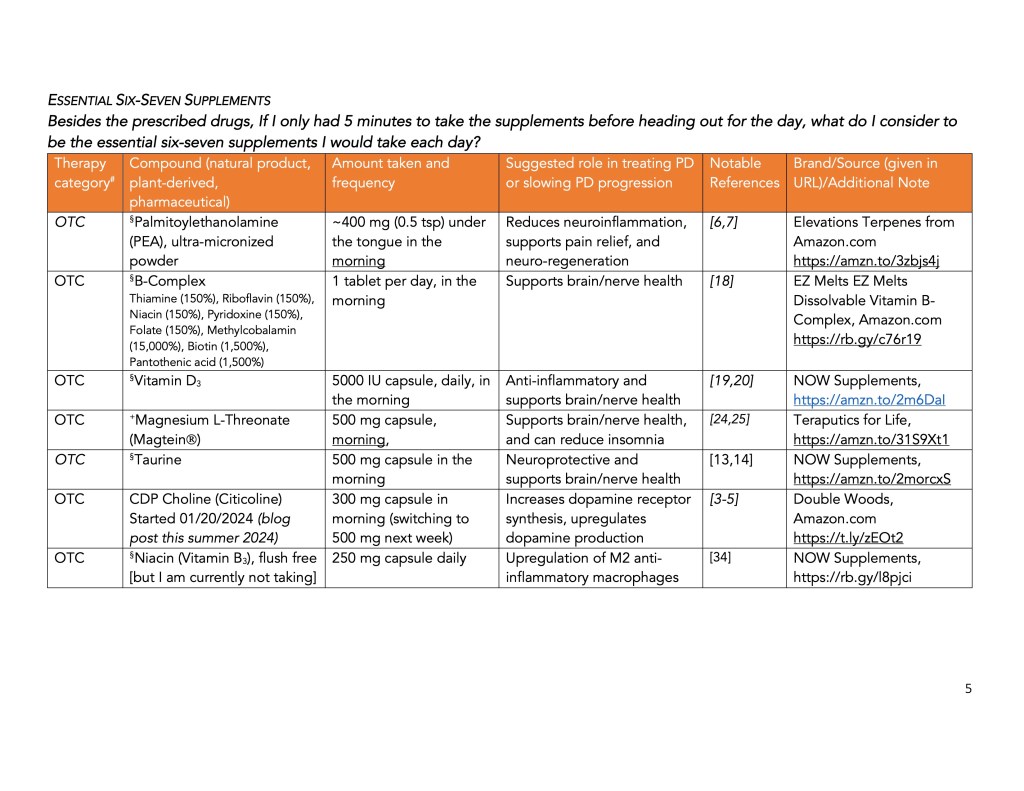
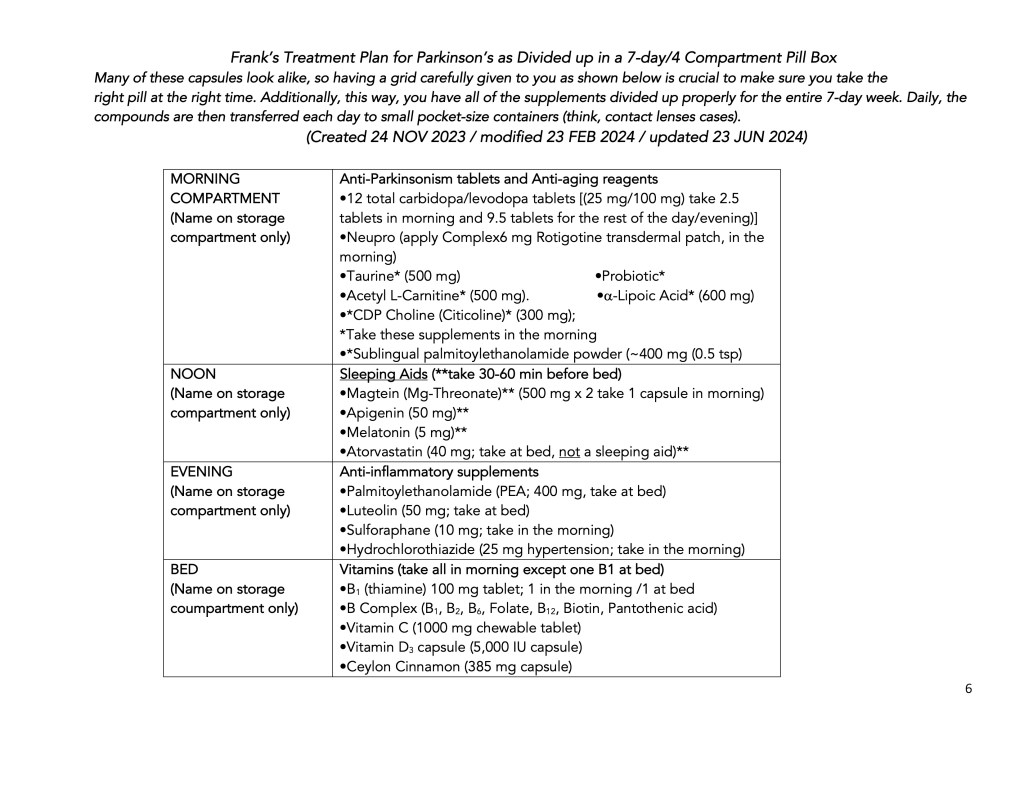
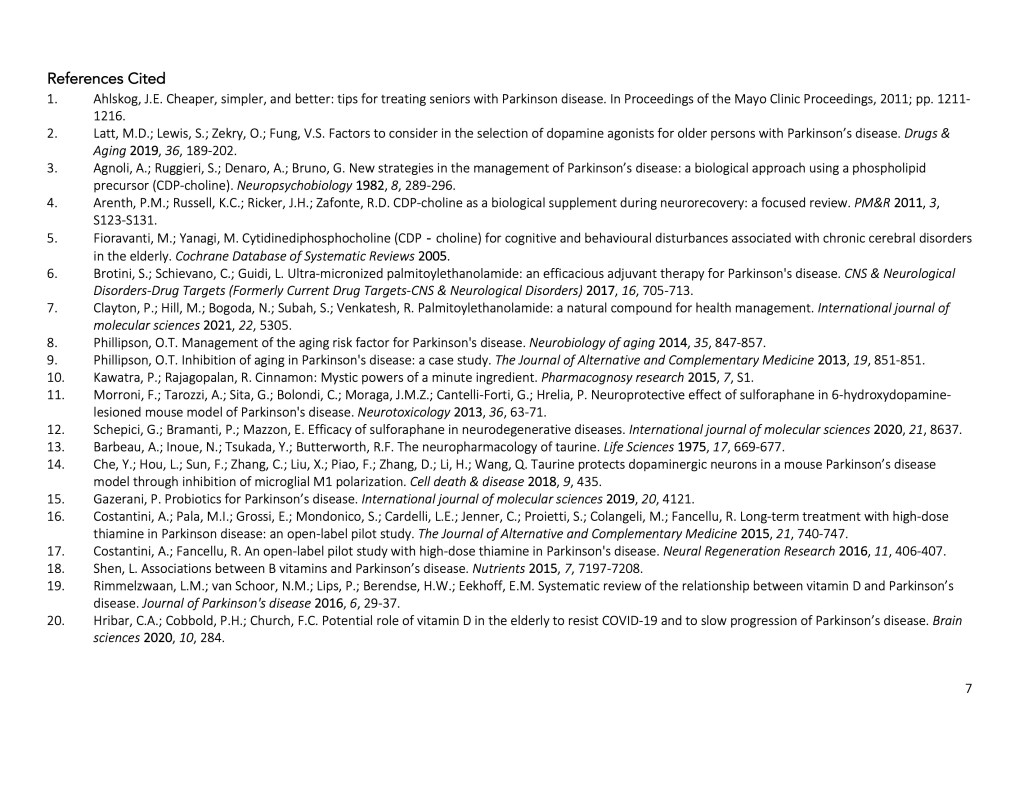
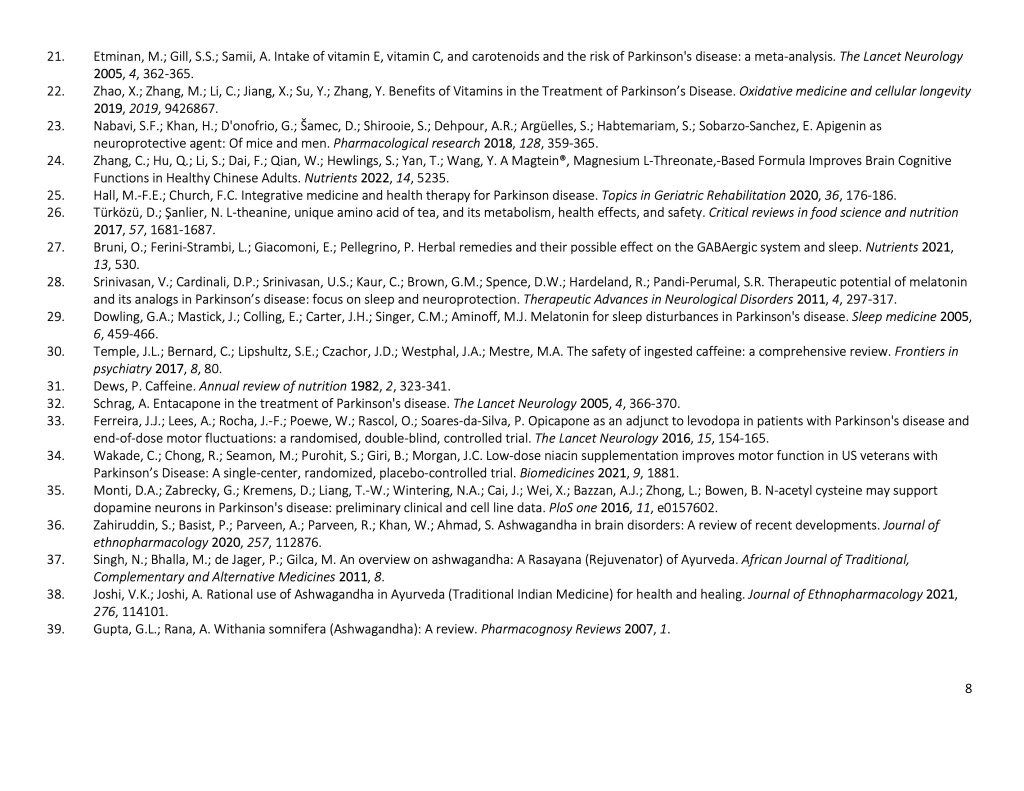
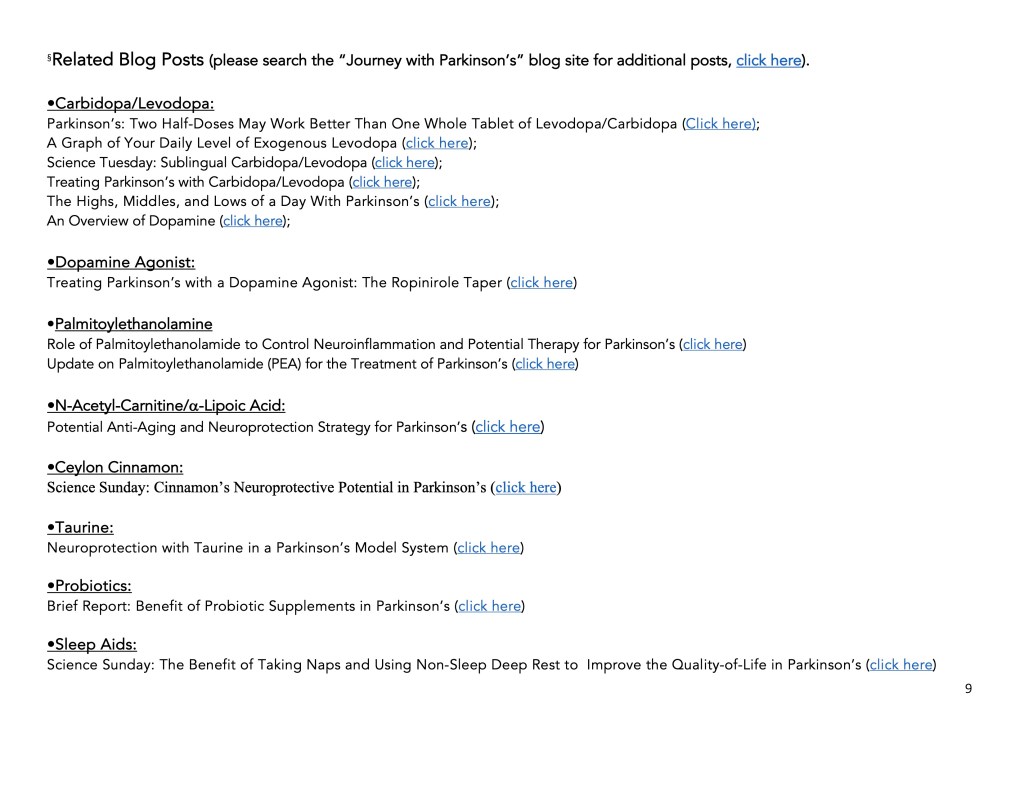
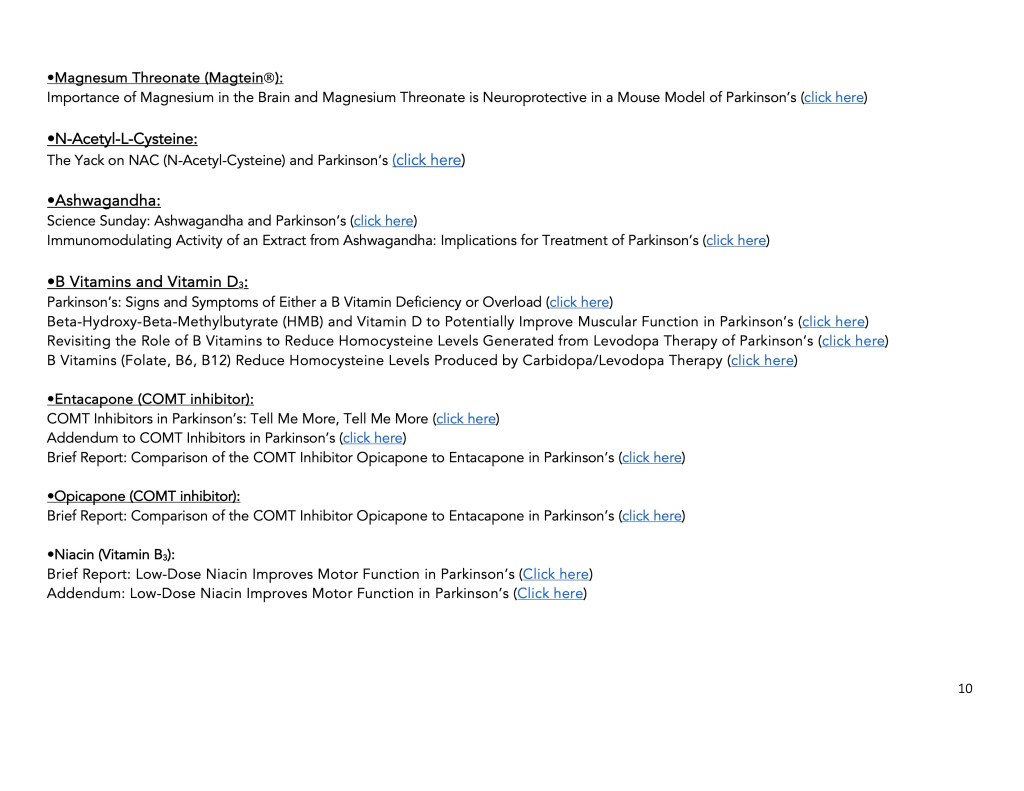
“I believe that you can, by taking some simple and inexpensive measures, extend your life and your years of well-being. My most important recommendation is that you take vitamins every day in optimal amounts, to supplement the vitamins you receive in your food.” Linus Pauling
Closing Comments: I invite you all to share your thoughts and ideas on the supplements you’ve found helpful. This forum is a platform for us to exchange knowledge and support each other in managing Parkinson’s. The goal of this post is to share ideas regarding supplements that we each feel are valuable in managing Parkinson’s. Since there are hundreds of potential supplements we could consider taking to treat Parkinson’s, only by sharing, do we cross that bridge of therapeutic intervention to try to reduce the pace of progression of our Parkinson’s? Keep exercising, stay focused and educated, and strive to find the best combination of supplements for your Parkinson’s.
“Without a daily supply of proteins, vitamins, and minerals, no matter how much energy we get in the form of calories, our bodies and minds deteriorate because we are not able to fully replace the dying cells in our internal and external organs.” Paul Zane Pilzer
 Journey with Parkinson's
Thank you Frank. Always so informative
Can you share if you do a blood panel and if so what do you have tested?
I have found the PEA with Luteolin extremely helpful in the afternoon. However cannot take after 4309 as it keeps me awake.
LikeLike
Thank you Frank
The PEA with Luteolin is extremely helpful with fatigue and brain fog in the afternoon. I don’t take after 430 pm as i it will keep me awake.
Do you do regular bloodwork, if so what do you do and frequency?
Tommy
Tommy,
thanks for the note. Glad to hear you have gotten positive effects wit the PEA/Luteolin mixture.
Your question about blood work is essential. My doctors will routinely scan for these vitamins and minerals that I take, like vitamin D3, B12, etc., and also include Mg and others. We closely monitor the kidney and liver function because they would be the organs to worry about if one of these compounds behaves detrimentally. It is a good question, and I don’t know how better to answer it than to say we worry about some of these compounds in the long term.
And then there are surprises like Ashwagandha having immunomodulating action (well, a component of the material used to make this herb/spice/substance) because I like many aspects of its biological functions in the brain. Until I sort out this issue with Ashwagandha, it remains on hold. Do not take any more.
Take care,
Frank
LikeLike